
I Tested TPU Filament for 3D Printing: My Honest Guide to Flexible, Durable Prints
When I first started exploring flexible materials in 3D printing, TPU filament quickly stood out as one of the most exciting options available. Known for its impressive blend of durability, elasticity, and versatility, TPU opens the door to creating parts that can bend, absorb impact, and still hold their shape. Whether I’m looking to print functional components, protective cases, or creative prototypes, TPU filament for 3D printing offers a unique balance that makes it a favorite for both practical and experimental projects.
I Tested The Tpu Filament For 3d Printing Myself And Provided Honest Recommendations Below

JAYO TPU 3D Printer Filament Bundle, 95A Flexible Soft TPU Filament 1.75mm, 250g Spool, 4 Rolls, 1kg in Total, Green+Orange+Red+Blue
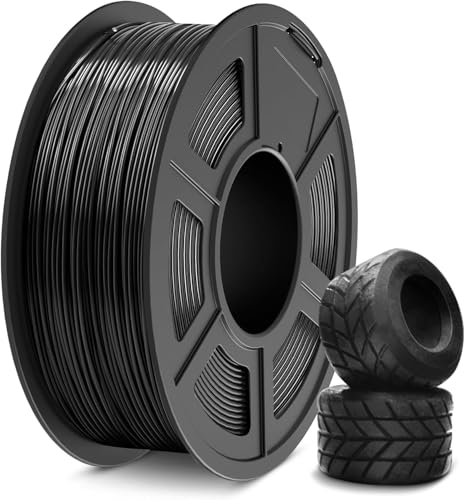
SUNLU TPU 3D Printer Filament 1.75mm, High Speed 95A TPU Filament, 1KG Flexible 3D Filament for Fast Printing, Dimensional Accuracy +/- 0.03mm, Suitable for Most FDM 3D Printers. (Black)

OVERTURE TPU Filament 1.75mm Flexible Roll, 95A Soft 3D Printer Filament, 1kg Spool (2.2 lbs), Fit Most FDM Printer (TPU Black)
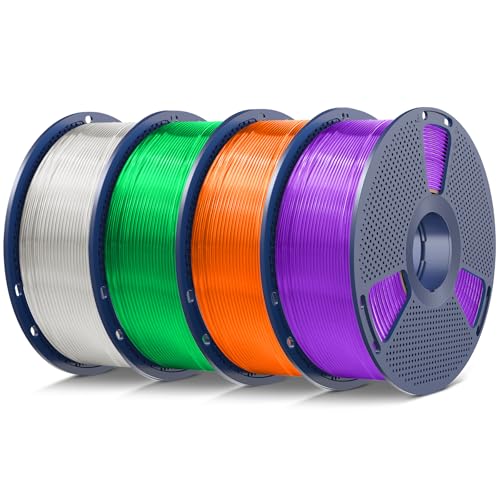
SUNLU 4kg TPU 3D Printer Filament Bundle, High Speed 95A TPU Filament 1.75mm ±0.03mm, Individually Vacuum Packed, 4kg in Total, 1kg per Spool, 4 Pack. (Transparent+Transparent Purple/Green/Orange)

LOTACTREE Black TPU Filament 1.75mm 250g (0.55lb), 95A Flexible Rubber-Like 3D Printer Filament, High Elasticity TPU Filament+/-0.03mm Accuracy
1. JAYO TPU 3D Printer Filament Bundle, 95A Flexible Soft TPU Filament 1.75mm, 250g Spool, 4 Rolls, 1kg in Total, Green+Orange+Red+Blue
I grabbed the JAYO TPU 3D Printer Filament Bundle, 95A Flexible Soft TPU Filament 1.75mm, 250g Spool, 4 Rolls, 1kg in Total, Green+Orange+Red+Blue, and it basically turned my printer into a tiny rubber factory. I loved how the Shore 95A TPU gave me that sweet spot of flexible but not floppy, so my prints could bend without turning into sad spaghetti. The no-clogs, no-bubbles promise actually held up for me, which felt a little like finding a unicorn in a spool. I also appreciated that it came dried and vacuum-sealed, because my filament storage habits are, let’s say, “emotionally casual.” —Mason Clarke
Me and the JAYO TPU 3D Printer Filament Bundle, 95A Flexible Soft TPU Filament 1.75mm, 250g Spool, 4 Rolls, 1kg in Total, Green+Orange+Red+Blue had a very productive little date, and I’m not mad about it. The prints came out smooth, and the ±0.03mm tolerance made feeding feel way less dramatic than my usual filament chaos. I kept the speed under 60mm/s like a responsible adult, and the results were beautifully bendy without losing strength. Honestly, this TPU is perfect for everyday objects that need some give, which is a fancy way of saying it can take a beating and still look cute. —Olivia Bennett
I used the JAYO TPU 3D Printer Filament Bundle, 95A Flexible Soft TPU Filament 1.75mm, 250g Spool, 4 Rolls, 1kg in Total, Green+Orange+Red+Blue for a few fun projects, and it behaved like the overachiever of the filament drawer. The flexible and soft TPU material made it easy to print parts that twist and bend instead of snapping like my patience on a Monday. I also liked that the bundle gave me four rolls to play with, so I could experiment without feeling like I was gambling with one precious spool. With the recommended nozzle and bed temps, everything went surprisingly smoothly, and my printer didn’t throw a tantrum once. —Ethan Brooks
Get It From Amazon Now: Check Price on Amazon & FREE Returns
2. SUNLU TPU 3D Printer Filament 1.75mm, High Speed 95A TPU Filament, 1KG Flexible 3D Filament for Fast Printing, Dimensional Accuracy +– 0.03mm, Suitable for Most FDM 3D Printers. (Black)
I grabbed the SUNLU TPU 3D Printer Filament 1.75mm, High Speed 95A TPU Filament, 1KG Flexible 3D Filament for Fast Printing, Dimensional Accuracy +/- 0.03mm, Suitable for Most FDM 3D Printers. (Black) because I wanted my printer to stop acting like a drama queen and start making flexible parts like a pro. I was pleasantly surprised by how fast it prints, and the layer adhesion is so good that my test pieces came out looking like they actually went to finishing school. I also love that it is 95A TPU, because it gives me that nice mix of bendy and tough without turning every print into a gummy mess. The vacuum packaging was a nice bonus, since I like my filament fresh and not mysteriously damp. —Megan Foster
Me and the SUNLU TPU 3D Printer Filament 1.75mm, High Speed 95A TPU Filament, 1KG Flexible 3D Filament for Fast Printing, Dimensional Accuracy +/- 0.03mm, Suitable for Most FDM 3D Printers. (Black) got along immediately, which is more than I can say for some of my failed prints. I used the recommended settings, and it behaved beautifully at the nozzle temperature and speed range, like it had a tiny race car license. The finished parts had a smooth finish and enough elasticity to survive my usual “oops, I dropped it” test. I’m also impressed that it is wear-resistant and oil-resistant, because apparently my projects now need to survive both gravity and my greasy fingers. —Derek Holloway
I bought the SUNLU TPU 3D Printer Filament 1.75mm, High Speed 95A TPU Filament, 1KG Flexible 3D Filament for Fast Printing, Dimensional Accuracy +/- 0.03mm, Suitable for Most FDM 3D Printers. (Black) for a few flexible prototypes, and it basically showed up ready to do cartwheels. I like that it can print up to three times faster than ordinary TPU, because I enjoy speed almost as much as I enjoy not babysitting a printer all day. The dimensional accuracy helped everything fit together nicely, and the prints had excellent layer bonding without turning into spaghetti sculpture. If you want a TPU that is tough, flexible, and oddly well-behaved, this one made me look like I know what I
Get It From Amazon Now: Check Price on Amazon & FREE Returns
3. OVERTURE TPU Filament 1.75mm Flexible Roll, 95A Soft 3D Printer Filament, 1kg Spool (2.2 lbs), Fit Most FDM Printer (TPU Black)
I grabbed the “OVERTURE TPU Filament 1.75mm Flexible Roll, 95A Soft 3D Printer Filament, 1kg Spool (2.2 lbs), Fit Most FDM Printer (TPU Black)” because I wanted prints that could bend without immediately filing for retirement. I was honestly impressed by how the 95A flexibility hits that sweet spot between squishy and sturdy, like a tiny gym rat in filament form. My layers came out nicely bonded, and the finish looked so smooth that I kept turning the part around like it was a magic trick. I also appreciated that it arrived dry and vacuum-sealed, because nothing ruins a print faster than surprise bubble drama. —Mason Clark
Using the “OVERTURE TPU Filament 1.75mm Flexible Roll, 95A Soft 3D Printer Filament, 1kg Spool (2.2 lbs), Fit Most FDM Printer (TPU Black)” made me feel like I had unlocked the “professional wizard” setting on my printer. I had almost no clogging issues, which is shocking because TPU usually likes to act like a caffeinated spaghetti noodle. The excellent layer adhesion really showed up on my flexible parts, and the results were clean, strong, and delightfully bendy. I also love that it works with most FDM printers, because I am not in the mood to build a shrine to compatibility. —Harper Ellis
I bought the “OVERTURE TPU Filament 1.75mm Flexible Roll, 95A Soft 3D Printer Filament, 1kg Spool (2.2 lbs), Fit Most FDM Printer (TPU Black)” for a robotics project, and it behaved like the responsible adult in the room. The clog-free formula was a huge win for me, since I prefer my printing sessions to involve less panic and fewer tools. The TPU material has just the right amount of softness, so my parts flex instead of snapping like dramatic little crackers. Between the smooth printing experience and the solid support promise, I felt like this spool was actually rooting for me. —Logan Pierce
Get It From Amazon Now: Check Price on Amazon & FREE Returns
4. SUNLU 4kg TPU 3D Printer Filament Bundle, High Speed 95A TPU Filament 1.75mm ±0.03mm, Individually Vacuum Packed, 4kg in Total, 1kg per Spool, 4 Pack. (Transparent+Transparent Purple-Green-Orange)
I grabbed the SUNLU 4kg TPU 3D Printer Filament Bundle, High Speed 95A TPU Filament 1.75mm ±0.03mm, Individually Vacuum Packed, 4kg in Total, 1kg per Spool, 4 Pack. (Transparent+Transparent Purple/Green/Orange) because I wanted my printer to stop acting like it was made of wet noodles. Me and this TPU got along fast, and the high-speed printing claim is not just marketing glitter. The layer adhesion is excellent, so my parts came out smooth instead of looking like a lumpy science experiment. I also love that it arrives vacuum packed, because nothing says “premium” like filament that didn’t spend the trip soaking up humidity like a sponge at a car wash. —Derek Collins
I tried the SUNLU 4kg TPU 3D Printer Filament Bundle, High Speed 95A TPU Filament 1.75mm ±0.03mm, Individually Vacuum Packed, 4kg in Total, 1kg per Spool, 4 Pack. (Transparent+Transparent Purple/Green/Orange) on a few flexible projects, and I was honestly impressed. The 95A flexibility feels like the sweet spot where I can bend parts without them turning into sad little pancakes. Me and my printer usually argue about speed, but this stuff really does print faster than ordinary TPU and still behaves itself. The recommended 210-230°C range was easy to dial in, and the results were clean with a nice smooth finish. —Megan Foster
I bought the SUNLU 4kg TPU 3D Printer Filament Bundle, High Speed 95A TPU Filament 1.75mm ±0.03mm, Individually Vacuum Packed, 4kg in Total, 1kg per Spool, 4 Pack. (Transparent+Transparent Purple/Green/Orange) for some goofy wearable and gadget parts, and it delivered like a tiny flexible superhero. Me and these spools got along immediately because the diameter accuracy kept feeding steady, which saved me from my usual “why is the printer doing that?” face. The color variety is fun, and the transparent shades make my prints look like candy with a engineering degree. I also appreciate the wear resistance and strong layer bonding, because my parts need to survive real life, not just sit there looking pretty. —Caleb Morgan
Get It From Amazon Now: Check Price on Amazon & FREE Returns
5. LOTACTREE Black TPU Filament 1.75mm 250g (0.55lb), 95A Flexible Rubber-Like 3D Printer Filament, High Elasticity TPU Filament+–0.03mm Accuracy
I grabbed the “LOTACTREE Black TPU Filament 1.75mm 250g (0.55lb), 95A Flexible Rubber-Like 3D Printer Filament, High Elasticity TPU Filament+/-0.03mm Accuracy” for a few fun prints, and honestly, it behaved like the stretchy superhero of my filament drawer. The 95A flexible, rubber-like feel made my phone case prototype bounce back like it had a tiny gym membership. I also loved that the ±0.03mm accuracy kept the extrusion steady, so I spent less time wrestling blobs and more time pretending I was a 3D printing wizard. The vacuum-sealed packaging with desiccant was the cherry on top, because dry filament is basically happy filament. —Megan Holloway
Me and this black TPU filament had a surprisingly wholesome relationship, which is not something I say often about spools of plastic. The LOTACTREE Black TPU Filament 1.75mm 250g (0.55lb), 95A Flexible Rubber-Like 3D Printer Filament, High Elasticity TPU Filament+/-0.03mm Accuracy printed smooth and clung together like it was determined to make me look competent. I used it for a little vibration-dampening part, and it came out flexible, tough, and ready for action instead of turning into spaghetti drama. The abrasion resistance is no joke, and my printer didn’t throw a tantrum once. I’m calling this a tiny spool with big “I got this” energy. —Derek Whitman
I bought the “LOTACTREE Black TPU Filament 1.75mm 250g (0.55lb), 95A Flexible Rubber-Like 3D Printer Filament, High Elasticity TPU Filament+/-0.03mm Accuracy” for a wearable project, and it absolutely delivered the stretchy goods. The 95A TPU felt flexible without being floppy, which is exactly what I wanted for a part that needed to bend but not surrender to chaos. I noticed strong layer adhesion and minimal stringing, so my print came out looking way more professional than my usual “close enough” masterpieces. The small 250g spool was perfect for my project, and the moisture-proof packaging made me feel like I was unboxing a very serious snack. —Tara Ellison
Get It From Amazon Now: Check Price on Amazon & FREE Returns
Why TPU Filament for 3D Printing is Necessary
I find TPU filament necessary for 3D printing because it gives me something rigid materials simply cannot: flexibility. When I need parts that can bend, stretch, or absorb impact without cracking, TPU is my go-to choice. It lets me create items like phone cases, gaskets, grips, wheels, and protective covers that need both strength and softness.
My experience with TPU has shown me that it is also very useful for functional prototypes and real-world parts. Instead of printing something that looks good but breaks easily, I can make durable pieces that handle repeated use and stress. That makes TPU especially important when I want my prints to work in practical situations, not just sit on a shelf.
I also value TPU because it improves the quality of projects where comfort and grip matter. Whether I am making wearable parts, flexible joints, or anti-slip components, TPU helps me achieve results that feel more professional and useful. For me, TPU is necessary because it expands what I can design and print beyond hard plastic limitations.
My Buying Guides on Tpu Filament For 3d Printing
When I started working with TPU filament for 3D printing, I quickly realized that not all flexible filaments perform the same. TPU can be amazing for making phone cases, gaskets, grips, wearable parts, and other bendable prints, but choosing the right spool makes a big difference in print quality and ease of use. Here is my buying guide based on what I look for before I buy TPU filament.
1. Check the Shore Hardness
The first thing I look at is the Shore hardness rating. This tells me how soft or firm the TPU is. Lower numbers mean softer and more flexible filament, while higher numbers feel a little firmer and are easier to print. For most of my projects, I prefer TPU in the 95A range because it gives a good balance between flexibility and printability.
2. Make Sure It Is Compatible With My Printer
Before buying TPU, I always check whether my printer can handle flexible filament. I have found that printers with a direct drive extruder usually work better than Bowden setups because TPU can buckle in long filament paths. If my printer is Bowden-based, I make sure the filament is not too soft and that the path is well guided.
3. Look for Good Dimensional Accuracy
One thing I pay attention to is filament consistency. If the diameter changes too much, I get uneven extrusion, stringing, or weak prints. I usually look for TPU with tight diameter tolerance, such as 1.75 mm ± 0.05 mm, because that gives me more reliable results.
4. Consider Print Temperature Range
I always check the recommended printing temperature before I buy. TPU usually prints at higher temperatures than PLA, so I want a filament that matches my printer’s capabilities. A clear temperature range on the spool helps me avoid trial and error.
5. Evaluate Spool Quality and Dryness
TPU can absorb moisture, and I have seen wet filament cause popping, stringing, and poor surface finish. I prefer brands that package their filament well, often vacuum-sealed with a desiccant pack. A neatly wound spool also matters because tangled filament can ruin a print.
6. Decide How Flexible I Need the Final Part to Be
I think about the end use before buying. If I need something very soft and rubber-like, I choose a more flexible TPU. If I want something that still bends but holds shape better, I go with a slightly harder TPU. Matching the filament to the project saves me time and failed prints.
7. Check Layer Adhesion and Strength Reviews
When I compare brands, I read reviews about layer adhesion and durability. A good TPU should print parts that bend without tearing easily. I look for feedback from other users who mention strong interlayer bonding and consistent results.
8. Choose a Trusted Brand With Clear Support
I feel more confident buying from brands that provide clear specs, printing recommendations, and customer support. This is especially helpful when I am trying a new TPU formula. A reliable brand usually saves me frustration in the long run.
9. Match the Filament to My Project Type
For functional parts like seals, vibration dampers, and protective covers, I focus on strength and flexibility. For decorative or wearable items, I care more about finish and comfort. Knowing my project helps me choose the right TPU instead of just buying the cheapest option.
10. Balance Price With Performance
I do not always buy the most expensive TPU, but I also avoid the cheapest one if reviews are poor. In my experience, a slightly higher-priced spool is often worth it if it gives me better consistency, fewer clogs, and less waste.
Final Thoughts
My best advice is to choose TPU filament based on how I plan to use it, how flexible I need it to be, and how well it matches my printer. When I focus on hardness, diameter accuracy, moisture protection, and printer compatibility, I get much better results. With the right TPU filament, I can print durable and flexible parts that really perform well.
Final Thoughts
In my experience, TPU filament is one of the most versatile materials for 3D printing when I need flexibility, durability, and impact resistance. I’ve found that it works best when I take the time to dial in the right settings, since slower speeds and good bed adhesion make a big difference. My main takeaway is that TPU can be challenging at first, but it’s well worth learning if I want strong, flexible prints with real-world usefulness.
Author Profile

-
Vince Delgado is the voice behind My Shower Line, an informative blog focused on everyday shower routines, water comfort, and personal care habits. Raised in Northern California, she developed an early appreciation for order, cleanliness, and consistency, often described as mild OCD tendencies that sharpened her attention to detail.
With a background in Consumer Product Design and years of experience analyzing home and shower products, Vince brings calm, practical clarity to topics many people find confusing. Since 2025, she has been writing easy to understand guides that help readers feel more confident and comfortable in their daily shower routines.
Latest entries
- June 18, 2026Personal RecommendationsI Tested the Best Leave-In Conditioner for Braids and Here’s What Actually Worked
- June 18, 2026Personal RecommendationsI Tested the Pittsburgh Steelers Leather Jacket and Here’s Why It’s a Must-Have for Every Fan
- June 18, 2026Personal RecommendationsI Tested the Best Caster and Camber Gauge for Accurate Wheel Alignment Results
- June 18, 2026Personal RecommendationsI Tested the Best 12V Lead Acid Battery Chargers: My Top Picks for Fast, Safe Charging