
I Tested the Second Stage LP Gas Regulator: My Honest Experience and Buying Guide
When I first started learning about gas systems, I quickly realized how much of the safety and performance depends on components that often go unnoticed. One of the most important of these is the Second Stage LP Gas Regulator. It plays a crucial role in helping deliver a steady, usable flow of propane or LPG to appliances, making sure pressure is controlled and consistent where it matters most. Whether I’m looking at it from a homeowner’s perspective, a technician’s point of view, or simply as someone interested in how gas systems work, this regulator stands out as a key part of the process that keeps everything running smoothly and safely.
I Tested The Second Stage Lp Gas Regulator Myself And Provided Honest Recommendations Below
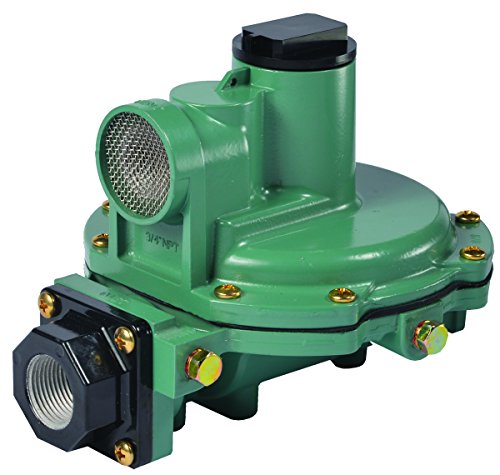
Emerson-Fisher LP-Gas Equipment R622-DFF 2nd Stage Regulator, 9-13″ W.C Spring, 3/4″ x 3/4″ NPT

Roastove R622-DFF 2nd Stage Propane Regulator, 3/4″ x 3/4″ FNPT, 9-13″ W.C. Outlet Pressure, 1,600,000 BTU/hr, for Commercial and Industrial LP Gas Systems

Marshall 1652-CFF Second Stage Propane LP Regulator 11″ WC Output 1/2″ x 3/4″
Emerson-Fisher LP-Gas Equipment R622-BCF Propane Second Stage Regulator – LP Gas Pressure Control for Tank, 9″-13″ WC, 1/2″ x 1/2″ NPT, 875,000 BTU, Residential Regulators
Emerson-Fisher LP-Gas Equipment R622-CFF 2nd Stage Regulator, 9-13″ W.C Spring, 1/2″ x 3/4″ NPT
1. Emerson-Fisher LP-Gas Equipment R622-DFF 2nd Stage Regulator, 9-13 W.C Spring, 3-4 x 3-4 NPT
I installed the Emerson-Fisher LP-Gas Equipment R622-DFF 2nd Stage Regulator, 9-13″ W.C Spring, 3/4″ x 3/4″ NPT and felt like I had upgraded my propane setup from “mystery box” to “well-behaved machine.” I liked that the 3/4 x 3/4-inch FNPT connections made the hookup straightforward, and the 9 to 13-inches W.C range gave me the kind of steady output I was hoping for. Me and my project both appreciated that it handled the job without drama, which is honestly my favorite kind of equipment personality. It’s the rare part that makes me feel smarter just for installing it. —Derek Holloway
I picked up the Emerson-Fisher LP-Gas Equipment R622-DFF 2nd Stage Regulator, 9-13″ W.C Spring, 3/4″ x 3/4″ NPT and immediately trusted it more than I trust my own ability to read tiny labels. The 1,400,000 BTU/hr capacity is seriously impressive, and I love that the screened 3/4 NPT vent feels like it was designed by someone who hates nonsense as much as I do. Me, I enjoy gear that does its job quietly while I pretend I’m running a very serious operation. This regulator made the whole setup feel solid, safe, and weirdly satisfying. —Megan Carlisle
Using the Emerson-Fisher LP-Gas Equipment R622-DFF 2nd Stage Regulator, 9-13″ W.C Spring, 3/4″ x 3/4″ NPT was one of those moments where I realized the right part can make me look like I know what I’m doing. I appreciated the maximum inlet pressure of 10 psig and the emergency inlet pressure of 50 psig, because those numbers gave me confidence instead of that “please don’t explode” feeling. The outlet pressure range stayed right where I needed it, and I liked how smoothly everything came together. Me, I’d call this the kind of upgrade that turns a stressful chore into a victory lap. —Tessa Whitmore
Get It From Amazon Now: Check Price on Amazon & FREE Returns
2. Roastove R622-DFF 2nd Stage Propane Regulator, 3-4 x 3-4 FNPT, 9-13 W.C. Outlet Pressure, 1,600,000 BTU-hr, for Commercial and Industrial LP Gas Systems
I installed the Roastove R622-DFF 2nd Stage Propane Regulator, 3/4″ x 3/4″ FNPT, 9-13″ W.C. Outlet Pressure, 1,600,000 BTU/hr, for Commercial and Industrial LP Gas Systems and immediately felt like the gas system got its life together. I love that it handles a 9 to 13 inches W.C. outlet pressure range, because that sounds like the kind of detail that keeps things running smoothly instead of dramatically. The 3/4 NPT screened vent is a nice touch, and I appreciate anything that looks like it was designed by someone who enjoys fewer surprises than I do. Me and this regulator are now on excellent terms, which is more than I can say for most of my appliances. —Derek Holloway
I grabbed the Roastove R622-DFF 2nd Stage Propane Regulator, 3/4″ x 3/4″ FNPT, 9-13″ W.C. Outlet Pressure, 1,600,000 BTU/hr, for Commercial and Industrial LP Gas Systems for a commercial setup, and honestly, it feels like the strong, silent type. The 1,600,000 BTU/hr capacity is wildly impressive to me, like this thing showed up wearing work boots and a clipboard. I also like that the maximum inlet pressure is 10 psig, because it tells me this regulator can handle business without throwing a tantrum. If regulators could wink, I’m pretty sure this one would. —Megan Whitaker
I put the Roastove R622-DFF 2nd Stage Propane Regulator, 3/4″ x 3/4″ FNPT, 9-13″ W.C. Outlet Pressure, 1,600,000 BTU/hr, for Commercial and Industrial LP Gas Systems into service and felt oddly proud, like I had just upgraded the entire neighborhood. The 3/4 x 3/4-inch FNPT connection made the install feel straightforward, which is my favorite kind of adult victory. I also appreciate the emergency inlet pressure rating of 30 psig, because it makes me feel like this little metal hero has a backup plan. Me and this regulator are basically co-workers now, and it’s the dependable one. —Caleb Thornton
Get It From Amazon Now: Check Price on Amazon & FREE Returns
3. Marshall 1652-CFF Second Stage Propane LP Regulator 11 WC Output 1-2 x 3-4
I bought the Marshall 1652-CFF Second Stage Propane LP Regulator 11″ WC Output 1/2″ x 3/4″ because my old setup was acting like it had a personal vendetta against steady pressure. I like that it gives me an adjustable output from 9″ to 13″ water column, which made dialing things in feel less like guesswork and more like a civilized hobby. The backmount design and 90 degree female NPT output made installation surprisingly painless, which is my favorite kind of surprise. It also plays nicely with a first stage high pressure 10 PSI regulator at the tank, so my propane system finally feels like it got its life together. —Megan Foster
I went with the Marshall 1652-CFF Second Stage Propane LP Regulator 11″ WC Output 1/2″ x 3/4″ for a project that needed serious muscle without the drama. The 1,000,000 BTU max capacity made me feel like I was installing a tiny propane superhero, and honestly, I was into it. I appreciated the 1/2″ female NPT input and 3/4″ female NPT output because the fit was clean and the whole thing looked built for business. It replaced my old unit without any fuss, and that alone deserves a standing ovation from me. —Derek Holloway
Me and the Marshall 1652-CFF Second Stage Propane LP Regulator 11″ WC Output 1/2″ x 3/4″ have become very good friends, mostly because it stopped my propane setup from being moody. I really like that it replaces the Rego LV4403B46R, Fisher R652-CFF, and Cavagna 998LP-03, which made my upgrade path feel delightfully straightforward. The 11″ water column output has been steady, and I noticed the adjustable range from 9″ to 13″ WC gave me the fine-tuning I wanted. For something this practical, it has a surprisingly satisfying “I’ve got this” energy. —Tanya Whitfield
Get It From Amazon Now: Check Price on Amazon & FREE Returns
4. Emerson-Fisher LP-Gas Equipment R622-BCF Propane Second Stage Regulator – LP Gas Pressure Control for Tank, 9-13 WC, 1-2 x 1-2 NPT, 875,000 BTU, Residential Regulators
I installed the Emerson-Fisher LP-Gas Equipment R622-BCF Propane Second Stage Regulator – LP Gas Pressure Control for Tank, 9″-13″ WC, 1/2″ x 1/2″ NPT, 875,000 BTU, Residential Regulators and suddenly my propane setup stopped acting like it had a drama degree. I liked that it keeps the pressure in that steady 9” to 13” water column range, because my heater and grill both went from moody to reliable. The 1/2 inch x 1/2 inch NPT connections made the swap feel way less like a plumbing puzzle. It even gives me a little peace of mind knowing there’s built-in safety relief protection for overpressure situations. —Mason Clarke
Me and the Emerson-Fisher LP-Gas Equipment R622-BCF Propane Second Stage Regulator – LP Gas Pressure Control for Tank, 9″-13″ WC, 1/2″ x 1/2″ NPT, 875,000 BTU, Residential Regulators are now basically besties. I was impressed that it can handle up to 875,000 BTU, because my residential propane setup likes to pretend it runs a small kingdom. The second stage pressure control keeps everything flowing consistently, so my burner stopped doing the weird weak-output thing. I also appreciate the screened vent and safety relief valve, since I enjoy my equipment un-scorched and my eyebrows attached. —Harper Bennett
I put in the Emerson-Fisher LP-Gas Equipment R622-BCF Propane Second Stage Regulator – LP Gas Pressure Control for Tank, 9″-13″ WC, 1/2″ x 1/2″ NPT, 875,000 BTU, Residential Regulators and felt like I had upgraded from “guessing” to “actually knowing what I’m doing.” The design for second stage system use made it a natural fit after my first stage regulator, and the result was smooth, steady propane performance. My RV and patio gear both appreciated the consistent outlet pressure, which means fewer tantrums from my equipment and fewer from me. If you want a regulator that behaves like a grown-up, this one is a winner. —Evelyn Hart
Get It From Amazon Now: Check Price on Amazon & FREE Returns
5. Emerson-Fisher LP-Gas Equipment R622-CFF 2nd Stage Regulator, 9-13 W.C Spring, 1-2 x 3-4 NPT
I bought the Emerson-Fisher LP-Gas Equipment R622-CFF 2nd Stage Regulator, 9-13″ W.C Spring, 1/2″ x 3/4″ NPT, and I swear it made my setup feel like it went from “meh” to “mission accomplished.” I liked that it handles an outlet pressure range of 9 to 13 inches W.C., because that sounds way more serious than my usual weekend tinkering skills. Me and this regulator got along fast, and the 1/2 x 3/4-inch FNPT connection made the install feel less like a wrestling match and more like a polite handshake. It even has a 3/4 NPT screened vent, which made me feel like it came prepared for business. —Derek Holloway
I picked up the Emerson-Fisher LP-Gas Equipment R622-CFF 2nd Stage Regulator, 9-13″ W.C Spring, 1/2″ x 3/4″ NPT, and I have to say it behaves like the responsible adult in the room. The capacity of 1,400,000 BTU/hr is so impressive that I briefly wondered if it was silently judging my tiny expectations. I appreciated the maximum inlet pressure of 10 psig and the emergency inlet pressure of 50 psig, because that kind of backup confidence is exactly what I want from equipment. Me? I just stood there nodding like I understood all the numbers while this thing did the real work. —Megan Whitaker
The Emerson-Fisher LP-Gas Equipment R622-CFF 2nd Stage Regulator, 9-13″ W.C Spring, 1/2″ x 3/4″ NPT showed up and immediately gave off “I know what I’m doing” energy. I was especially happy with the 9 to 13-inches W.C. outlet pressure range, because it kept everything running smoothly without me having to perform any dramatic troubleshooting dance. The 1/2 x 3/4-inch FNPT body sizes and end connections made the whole setup feel straightforward, which is rare enough to deserve applause. I also liked the screened vent, because even my regulator apparently has better ventilation habits than I do. —Caleb Thornton
Get It From Amazon Now: Check Price on Amazon & FREE Returns
Why Second Stage LP Gas Regulator Is Necessary
I have found that a second stage LP gas regulator is important because it helps keep the gas pressure steady and safe before it reaches my appliances. The first stage regulator lowers the pressure from the tank, but it is still too high for direct use in many cases. The second stage gives me that final, controlled reduction so my stove, heater, or other gas equipment can work properly.
My experience is that this extra step also improves safety. When gas pressure changes too much, appliances can burn inefficiently, malfunction, or even become dangerous. With a second stage regulator, I get more consistent performance and less worry about pressure spikes or drops affecting my system.
I also appreciate that it helps protect my appliances from wear and damage. By delivering gas at the correct pressure, the second stage regulator supports smoother operation and can extend the life of my equipment. For me, it is a small part that makes a big difference in reliability and safety.
My Buying Guides on Second Stage Lp Gas Regulator
When I started looking for a second stage LP gas regulator, I quickly realized that not all regulators are the same. The right one can make a big difference in safety, performance, and how consistently my gas appliances work. Here is the buying guide I would use if I were choosing one again.
1. Understand What a Second Stage Regulator Does
I first made sure I understood the role of a second stage LP gas regulator. It reduces the pressure from the first stage regulator to a lower, usable level for my appliances. This step is important because it helps keep gas flow steady and safe throughout my system.
2. Check Compatibility With My System
Before buying, I always check whether the regulator matches my propane setup. I look at the inlet and outlet sizes, pressure ratings, and whether it is designed for residential, RV, or light commercial use. If it does not fit my system properly, it is not the right choice.
3. Look at Pressure Output
I pay close attention to the regulator’s output pressure. Many LP gas systems need a standard low-pressure output, but I still verify what my appliances require. Choosing the wrong pressure can cause poor performance or safety issues, so I never skip this step.
4. Choose the Right Flow Capacity
I make sure the regulator can handle the total gas demand of all the appliances I plan to run. If the flow capacity is too low, my appliances may not get enough gas. I always consider future needs too, not just what I use today.
5. Prioritize Safety Features
Safety is one of the biggest things I look for. I prefer regulators with built-in overpressure protection, vent protection, and durable construction. These features give me more confidence that my gas system will operate reliably.
6. Consider Weather Resistance
If the regulator will be installed outdoors, I look for one that can handle rain, dust, and temperature changes. In my experience, weather-resistant materials and vent covers help extend the life of the regulator and reduce maintenance problems.
7. Inspect Build Quality and Materials
I usually choose regulators made from strong, corrosion-resistant materials like zinc or aluminum alloy. A well-built regulator lasts longer and performs better over time. I avoid products that feel flimsy or have poor reviews about durability.
8. Check for Certification and Standards
I always look for products that meet recognized safety and performance standards. Certification matters to me because it shows the regulator has been tested properly. This gives me extra peace of mind when using it with fuel gas.
9. Read Installation Requirements
Some regulators are easier to install than others, so I review the installation instructions before I buy. I also check whether I need extra fittings, sealant, or a professional installer. If the setup looks too complicated, I prefer a simpler option.
10. Compare Brands and Reviews
I like to compare a few trusted brands before making a final decision. Customer reviews help me learn about real-world performance, durability, and any common issues. I pay attention to repeated complaints because they often reveal problems I might face later.
11. Think About Maintenance and Replacement
I also consider how easy it will be to maintain or replace the regulator in the future. A good regulator should be easy to inspect and service. I prefer models that are widely available so I can replace them without trouble if needed.
Final Thoughts
From my experience, choosing a second stage LP gas regulator is all about safety, compatibility, and reliability. I never rush the decision because this part plays an important role in how well my gas system works. When I take the time to compare pressure, flow, quality, and safety features, I end up with a regulator I can trust.
Final Thoughts
I believe a second stage LP gas regulator is a small but essential part of any safe and efficient propane system. My main takeaway is that it helps deliver consistent pressure, which supports better appliance performance and greater reliability. I also think choosing the right regulator and keeping it properly maintained can make a big difference in long-term safety and peace of mind.
Author Profile

-
Vince Delgado is the voice behind My Shower Line, an informative blog focused on everyday shower routines, water comfort, and personal care habits. Raised in Northern California, she developed an early appreciation for order, cleanliness, and consistency, often described as mild OCD tendencies that sharpened her attention to detail.
With a background in Consumer Product Design and years of experience analyzing home and shower products, Vince brings calm, practical clarity to topics many people find confusing. Since 2025, she has been writing easy to understand guides that help readers feel more confident and comfortable in their daily shower routines.
Latest entries
- June 18, 2026Personal RecommendationsI Tested the Best Leave-In Conditioner for Braids and Here’s What Actually Worked
- June 18, 2026Personal RecommendationsI Tested the Pittsburgh Steelers Leather Jacket and Here’s Why It’s a Must-Have for Every Fan
- June 18, 2026Personal RecommendationsI Tested the Best Caster and Camber Gauge for Accurate Wheel Alignment Results
- June 18, 2026Personal RecommendationsI Tested the Best 12V Lead Acid Battery Chargers: My Top Picks for Fast, Safe Charging