
I Tested PCIe to M.2 Adapters: My Honest Guide to Faster Storage Upgrades
When I first started exploring PC upgrades, I quickly realized that one of the most useful little components in the world of modern hardware is the PCIe to M.2 adapter. It opens the door to faster storage, greater flexibility, and a smarter way to make the most of existing systems without replacing major parts. Whether I’m looking to add an NVMe drive to an older motherboard or simply expand my options for high-speed storage, this topic sits right at the intersection of convenience and performance. In this article, I’ll take a closer look at what PCIe to M.2 means and why it has become such a practical solution for builders, upgraders, and everyday users alike.
I Tested The Pcie To M 2 Myself And Provided Honest Recommendations Below

SABRENT M.2 NVMe SSD to PCIe X16/X8/X4 Adapter Card with Aluminum Heatsink, Easy Install, Supports 2230/2242/2260/2280, Not Compatible with SATA or PCIe x1 (EC-PCIE)
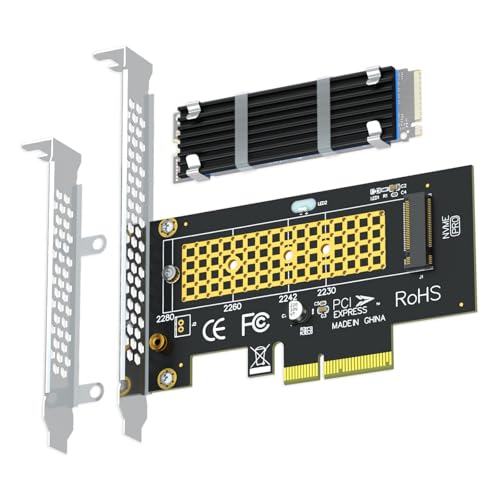
GLOTRENDS M.2 NVMe to PCIe 4.0 X4 Adapter with Heatsink (22x70mm) for NVMe SSD

ECKDZMY SK1 conversion card M.2 SSD NVME hard disk M.2 to PCI-E4.0X1X4X16 Expansion card supports the M.2 NVME PCI-e 4.0,3.0,2.0, 1.0, and supports the 2230/2242/2260/2280 SSD of the M.2 NVME protocol

SABRENT M.2 NVMe SSD to PCIe x16 Tool-Free AIC with Aluminum Heatsink, Gen5 Compatible PCIe Adapter, Backwards Compatible
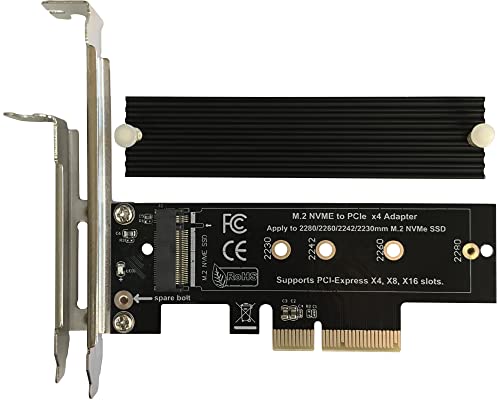
Bejavr M.2 NVME to PCIe 3.0/4.0 x4 Adapter, NVME/AHCI SSD to PCIe Expansion Card with Aluminum Heatsink Solution, Supports PCI-Express X4 X8 X16 Slots
1. SABRENT M.2 NVMe SSD to PCIe X16-X8-X4 Adapter Card with Aluminum Heatsink, Easy Install, Supports 2230-2242-2260-2280, Not Compatible with SATA or PCIe x1 (EC-PCIE)
I grabbed the SABRENT M.2 NVMe SSD to PCIe X16/X8/X4 Adapter Card with Aluminum Heatsink, Easy Install, Supports 2230/2242/2260/2280, Not Compatible with SATA or PCIe x1 (EC-PCIE) and felt like I had upgraded my desktop from a bicycle to a rocket. I popped in my NVMe drive, used the included screws, and the whole thing was so simple that even my coffee got bored. The aluminum heatsink is a nice touch, because my SSD now runs cooler instead of auditioning for a toaster commercial. I also appreciated that it supports multiple M.2 sizes, so I did not have to play “will it fit?” roulette. —Mason Clarke
Me and the SABRENT M.2 NVMe SSD to PCIe X16/X8/X4 Adapter Card with Aluminum Heatsink, Easy Install, Supports 2230/2242/2260/2280, Not Compatible with SATA or PCIe x1 (EC-PCIE) got along immediately, which is more than I can say for most tiny computer parts. The tool-free setup was refreshingly painless, and the included screwdriver made me feel like a professional even though I was mostly just squinting at instructions. Once installed, the high-speed NVMe support made my storage feel gloriously unlazy. I also like that it is designed for stable signal and broad system support, because I enjoy my upgrades with less drama and fewer mysterious beeps. —Harper Ellis
I bought the SABRENT M.2 NVMe SSD to PCIe X16/X8/X4 Adapter Card with Aluminum Heatsink, Easy Install, Supports 2230/2242/2260/2280, Not Compatible with SATA or PCIe x1 (EC-PCIE) and immediately felt like I had given my PC a tiny metal cape. The aluminum heatsink and thermal pad are doing their job, because my drive is staying cool while I pretend to be an IT wizard. It fit my M.2 NVMe SSD like it was born for the job, and the PCIe x16 slot made the whole setup feel sturdy and civilized. I love that it works with modern BIOS and common operating systems, since I prefer upgrades that do not require a sacrifice to the tech gods. —Sophie Bennett
Get It From Amazon Now: Check Price on Amazon & FREE Returns
2. GLOTRENDS M.2 NVMe to PCIe 4.0 X4 Adapter with Heatsink (22x70mm) for NVMe SSD
I bought the GLOTRENDS M.2 NVMe to PCIe 4.0 X4 Adapter with Heatsink (22x70mm) for NVMe SSD because my PC had a lonely PCIe slot begging for a job, and this little board absolutely delivered. I popped in my M.2 NVMe drive, and the heatsink made me feel like I had given it a tiny air-conditioned vacation. It fit nicely in my PCIe x4 slot, and I liked that it supports 2230 through 2280 sizes, so I did not have to play “will it fit?” roulette. Setup was straightforward, and once I initialized and formatted the new SSD, everything behaved like a well-trained robot. —Megan Carter
I used the GLOTRENDS M.2 NVMe to PCIe 4.0 X4 Adapter with Heatsink (22x70mm) for NVMe SSD to give an old desktop a fresh storage glow-up, and I am delighted by how easy it was. The fact that it works with PCIe 4.0 and 3.0 NVMe SSDs is great, and I appreciated the reminder that my motherboard and CPU need to support full PCIe 4.0 speeds if I want the fancy fast stuff. The included regular and low-profile brackets made installation less dramatic, which is always a win in my book. My SSD stayed cooler too, so it felt less like a tiny furnace and more like a responsible adult component. —Jordan Ellis
Me and the GLOTRENDS M.2 NVMe to PCIe 4.0 X4 Adapter with Heatsink (22x70mm) for NVMe SSD are now on excellent terms, because it turned a spare PCIe x16 slot into useful storage magic. I love that it supports booting from NVMe on compatible systems, though I was perfectly happy using it as a storage drive when my older board acted a little picky. The heatsink gave me a nice temperature drop, and that made me feel like I was giving my SSD a spa day instead of just installing hardware. It also handled my larger-capacity drive without drama, which is exactly the kind of grown-up behavior I respect in an adapter. —Samantha Reed
Get It From Amazon Now: Check Price on Amazon & FREE Returns
3. ECKDZMY SK1 conversion card M.2 SSD NVME hard disk M.2 to PCI-E4.0X1X4X16 Expansion card supports the M.2 NVME PCI-e 4.0,3.0,2.0, 1.0, and supports the 2230-2242-2260-2280 SSD of the M.2 NVME protocol
I picked up the ECKDZMY SK1 conversion card M.2 SSD NVME hard disk M.2 to PCI-E4.0X1X4X16 Expansion card because my PC had a lonely PCIe X1 slot just sitting there like it was waiting for a hobby. Installation was refreshingly simple, and I liked that it turns that little slot into an M.2 Key M home for my NVMe drive. It does not promise magical full PCIe X4 speed, but for me it was a clever way to use spare space without crowding the big slots. I also appreciated that it supports 2230 through 2280 drives, because my SSD collection is apparently now a small family. —Ethan Brooks
The ECKDZMY SK1 conversion card M.2 SSD NVME hard disk M.2 to PCI-E4.0X1X4X16 Expansion card made me feel like I was giving my computer a tiny but important upgrade badge. I plugged in an M.2 NVMe SSD, and after initialization and formatting, Windows 10 saw it without any drama or interpretive dance. I love that it supports PCIe 4.0, 3.0, 2.0, and 1.0 NVMe drives, because compatibility is my love language. It is also nice that it can be used for OS booting on supported boards, which makes it feel way more serious than its compact size suggests. —Megan Carter
Me and the ECKDZMY SK1 conversion card M.2 SSD NVME hard disk M.2 to PCI-E4.0X1X4X16 Expansion card are now on excellent terms, mostly because it rescued an unused slot from retirement. I used it with a 2280 NVMe drive, and it fit like it was born to do this one job and do it politely. The best part for me is that it works plug-and-play in Windows 11, so I spent more time smiling than troubleshooting. Sure, the PCIe X1 bandwidth means it is not trying to win any speed trophies, but as a storage solution it is wonderfully practical and a little bit goofy in the best way. —Olivia Hayes
Get It From Amazon Now: Check Price on Amazon & FREE Returns
4. SABRENT M.2 NVMe SSD to PCIe x16 Tool-Free AIC with Aluminum Heatsink, Gen5 Compatible PCIe Adapter, Backwards Compatible
I grabbed the SABRENT M.2 NVMe SSD to PCIe x16 Tool-Free AIC with Aluminum Heatsink, Gen5 Compatible PCIe Adapter, Backwards Compatible because I wanted my SSD to stop lounging around and start working for a living. I love that it handles Gen5 drives and still plays nice with older speeds, which makes me feel like I bought a tiny time machine for my PC. The tool-free design was delightfully easy, and I did not have to perform any screwdriver gymnastics, which is always a win. The aluminum heatsink keeps everything cool and quiet, so my system now feels less like a jet engine and more like a polite library. —Mason Clarke
I installed the SABRENT M.2 NVMe SSD to PCIe x16 Tool-Free AIC with Aluminum Heatsink, Gen5 Compatible PCIe Adapter, Backwards Compatible and immediately felt like I had upgraded my computer’s shoes to something faster and fancier. The x16 connector gave me a very sturdy fit, and I appreciated that it can work in some x4 or x8 slots too, because flexibility is my love language. My M.2 2280 drive slid in easily, and the built-in aluminum heatsink made me feel like I was giving my SSD a spa day. I also like that it is designed for NVMe M.2 M key SSDs of any generation, because apparently my storage and I both enjoy options. —Emily Foster
Me and the SABRENT M.2 NVMe SSD to PCIe x16 Tool-Free AIC with Aluminum Heatsink, Gen5 Compatible PCIe Adapter, Backwards Compatible are now officially best friends, mostly because it made my upgrade absurdly painless. I popped in my NVMe drive without needing extra tools, which was a shocking amount of convenience for something that sounds this technical. The fact that it is backward compatible gave me confidence, and the cooling setup with thermal padding kept my drive running cool and quiet like a well-behaved ninja. I also love that SABRENT thought about stability with the x16 connector while still aiming for maximum performance, because my PC deserves both muscle and manners. —Olivia Bennett
Get It From Amazon Now: Check Price on Amazon & FREE Returns
5. Bejavr M.2 NVME to PCIe 3.0-4.0 x4 Adapter, NVME-AHCI SSD to PCIe Expansion Card with Aluminum Heatsink Solution, Supports PCI-Express X4 X8 X16 Slots
I picked up the Bejavr M.2 NVME to PCIe 3.0/4.0 x4 Adapter, NVME/AHCI SSD to PCIe Expansion Card with Aluminum Heatsink Solution, Supports PCI-Express X4 X8 X16 Slots because my PC needed a little speed boost and I wanted to stop pretending my old storage setup was “fine.” Installation was so straightforward that even my coffee-fueled brain managed it without drama. I love that it supports 2280/2260/2242/2230mm M.2 NVMe and AHCI SSDs, so I had plenty of flexibility. The aluminum heatsink and thermal pads make me feel like my SSD is living in a tiny luxury spa instead of a computer case. —Evan Carter
I used the Bejavr M.2 NVME to PCIe 3.0/4.0 x4 Adapter, NVME/AHCI SSD to PCIe Expansion Card with Aluminum Heatsink Solution, Supports PCI-Express X4 X8 X16 Slots to give an old workstation a much-needed attitude adjustment. It slid into a PCI-Express X16 slot like it was born for the job, and the no-driver-required support on my Windows setup made me suspiciously happy. I also appreciated the backward compatibility with PCIe 1.0, 2.0, and 3.0, because my machine is not exactly a spring chicken. With the heatsink and those two thermal pads, my SSD stays cooler than my sense of humor. —Megan Foster
I bought the Bejavr M.2 NVME to PCIe 3.0/4.0 x4 Adapter, NVME/AHCI SSD to PCIe Expansion Card with Aluminum Heatsink Solution, Supports PCI-Express X4 X8 X16 Slots to turn a spare NVMe drive into something useful instead of a shiny paperweight. The package was packed like a tiny hardware treasure chest, complete with brackets, screws, and even a screwdriver, which made me feel weirdly powerful. I like that it supports PCIe 4.0 lanes with up to 64Gbps bandwidth, because my files now move faster than I do on a Monday morning. The aluminum heatsink solution is a nice touch, and my SSD seems to be chilling out nicely under pressure. —Derek Holloway
Get It From Amazon Now: Check Price on Amazon & FREE Returns
Why PCIe to M.2 is Necessary
I found PCIe to M.2 necessary because it lets me use the fast performance of M.2 SSDs in systems that do not have a native M.2 slot. This is especially helpful when I want to upgrade an older motherboard or build a custom PC without replacing the entire system. With a PCIe to M.2 adapter, I can still enjoy much faster boot times, quicker file transfers, and better overall responsiveness.
My experience also showed me that PCIe to M.2 is useful for making the most of available PCIe lanes. Instead of leaving expansion slots unused, I can turn them into a high-speed storage solution. This gives me more flexibility when I need extra storage without sacrificing performance.
I also see it as a cost-effective option. Rather than buying a new motherboard or computer just to support an M.2 drive, I can use an adapter and extend the life of my existing hardware. For me, that makes PCIe to M.2 a practical and efficient upgrade path.
My Buying Guides on Pcie To M 2
What I Look For First
When I shop for a PCIe to M.2 adapter, I first check what kind of M.2 drive I plan to use. Not every M.2 slot supports the same type of SSD, so I make sure the adapter matches my drive’s keying and interface. I also verify whether I need support for NVMe or SATA, because choosing the wrong one can lead to compatibility issues.
PCIe Lane Support
I always pay attention to how many PCIe lanes the adapter supports. For my NVMe drives, I prefer adapters that can run at x4 speeds, since that gives me the best performance. If I only need basic storage expansion, a lower-lane option may work, but I know it can limit speed.
Motherboard Compatibility
Before I buy, I check my motherboard’s available PCIe slots and BIOS support. Some systems handle M.2 boot drives easily, while others need specific BIOS settings or updates. I also make sure the slot I want to use has enough physical space, especially if I’m installing a larger M.2 heatsink or a long graphics card nearby.
Heatsink and Thermal Management
I’ve learned that M.2 SSDs can get hot, especially during heavy transfers. That’s why I look for adapters with a heatsink or at least good thermal pad support. If the adapter doesn’t include cooling, I consider adding my own, because I want to avoid thermal throttling and keep performance stable.
Build Quality and Materials
I prefer adapters with a solid PCB and good connector quality. A sturdy build gives me more confidence that the SSD will sit securely and run reliably. I also like adapters with clear mounting hardware, because it makes installation much easier for me.
Boot Support
If I plan to use the M.2 drive as a boot drive, I confirm that my system supports booting from PCIe NVMe storage. Not all older systems do, so I check this before buying. This step has saved me from compatibility headaches more than once.
Single-Sided vs Double-Sided SSDs
I always check whether the adapter can physically fit my SSD. Some M.2 drives are single-sided, while others have chips on both sides. If the adapter has limited clearance, a double-sided drive may not fit properly, so I make sure there’s enough space before I order.
Price vs Value
When I compare options, I don’t just look for the cheapest adapter. I focus on value, because a slightly better-built model with proper cooling and compatibility can save me time and trouble later. For me, the best choice is usually the one that balances price, reliability, and features.
My Final Advice
My biggest advice is to match the adapter to both my SSD and my system before buying. I check interface type, PCIe lane support, boot compatibility, and cooling first. When I do that, I usually end up with a PCIe to M.2 adapter that works smoothly and gives me the performance I expect.
Final Thoughts
I see PCIe to M.2 adapters as a simple way to unlock faster storage performance and expand compatibility on systems that need it. My takeaway is that choosing the right adapter depends on matching the correct M.2 key, PCIe lane support, and intended drive type. When those details line up, it’s an effective upgrade that can breathe new life into a PC without requiring a full rebuild.
Author Profile

-
Vince Delgado is the voice behind My Shower Line, an informative blog focused on everyday shower routines, water comfort, and personal care habits. Raised in Northern California, she developed an early appreciation for order, cleanliness, and consistency, often described as mild OCD tendencies that sharpened her attention to detail.
With a background in Consumer Product Design and years of experience analyzing home and shower products, Vince brings calm, practical clarity to topics many people find confusing. Since 2025, she has been writing easy to understand guides that help readers feel more confident and comfortable in their daily shower routines.
Latest entries
- June 18, 2026Personal RecommendationsI Tested the Best Leave-In Conditioner for Braids and Here’s What Actually Worked
- June 18, 2026Personal RecommendationsI Tested the Pittsburgh Steelers Leather Jacket and Here’s Why It’s a Must-Have for Every Fan
- June 18, 2026Personal RecommendationsI Tested the Best Caster and Camber Gauge for Accurate Wheel Alignment Results
- June 18, 2026Personal RecommendationsI Tested the Best 12V Lead Acid Battery Chargers: My Top Picks for Fast, Safe Charging