
I Tested Graphics Card Thermal Pads: My Best Picks for Better GPU Cooling and Performance
I’ve always found that the smallest components in a graphics card can make the biggest difference, and graphics card thermal pads are a perfect example. These often-overlooked materials play a crucial role in helping a GPU manage heat, maintain performance, and stay reliable over time. Whether I’m thinking about a gaming rig, a workstation, or a custom build, I see thermal pads as one of those behind-the-scenes essentials that quietly keep everything running smoothly.
I Tested The Graphics Card Thermal Pads Myself And Provided Honest Recommendations Below
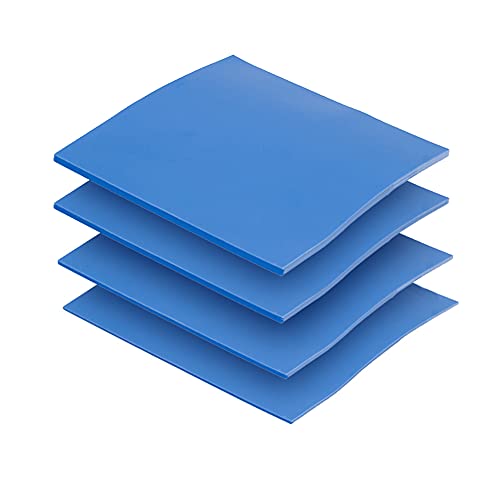
OwlTree 4 Pack Thermal Pad,100x100mm 0.5mm 1mm 1.5mm 2mm Highly Efficient Thermal Conductivity 6.0 W/mK,Heat Resistant Silicone Thermal Pads for Laptop Heatsink CPU GPU SSD IC LED Cooler

ARCTIC TP-3: Premium Performance Thermal Pad, 120 x 20 x 1.0 mm (Stackable to 2.0 mm Without Performance Loss), 4 Pieces – High Performance, Particularly Soft, Ideal Gap Filler, Bridging Gaps

ARCTIC TP-3: Premium Performance Thermal Pad, 100 x 100 x 1.5 mm (Stackable to 2.0 mm Without Performance Loss), 1 Piece – High Performance, Particularly Soft, Ideal Gap Filler, Bridging Gaps

Thermal Grizzly Minus Pad 8-120x20x1.0mm 2-Pack Thermal Interface Pad, Electrically Non-Conductive, High Thermal Conductivity & Compressibility for SSDs, GPUs & Electronics

HASAYAKI 30 Pack Thermal Pads, 20×67 mm by 5 Thickness 0.5 | 1 | 1.5 | 2 | 3 mm, Thermal Conductivity 2.0 W/m.k, Self-Adhesive & Soft, Ideal for Repairing and Cooling Electronics
1. OwlTree 4 Pack Thermal Pad,100x100mm 0.5mm 1mm 1.5mm 2mm Highly Efficient Thermal Conductivity 6.0 W-mK,Heat Resistant Silicone Thermal Pads for Laptop Heatsink CPU GPU SSD IC LED Cooler
I grabbed the OwlTree 4 Pack Thermal Pad,100x100mm 0.5mm 1mm 1.5mm 2mm Highly Efficient Thermal Conductivity 6.0 W/mK,Heat Resistant Silicone Thermal Pads for Laptop Heatsink CPU GPU SSD IC LED Cooler for a little cooling makeover, and my devices are now acting like they just discovered air conditioning. I love that the thermal conductivity is 6.0 W/mK because it makes me feel like I’m giving my electronics a spa day instead of a repair job. The fact that it comes in 0.5mm, 1mm, 1.5mm, and 2mm thicknesses means I can play thermal pad Tetris without losing my mind. I also like that I can cut the 100x100mm sheets freely, which is perfect for my “measure twice, trim once, panic once” workflow. —Megan Foster
Me and the OwlTree 4 Pack Thermal Pad,100x100mm 0.5mm 1mm 1.5mm 2mm Highly Efficient Thermal Conductivity 6.0 W/mK,Heat Resistant Silicone Thermal Pads for Laptop Heatsink CPU GPU SSD IC LED Cooler had a very productive relationship, mostly because it did exactly what I needed without complaining. I appreciate that it is heat resistant from -40 ℃ to 200 ℃, so it feels tougher than my laptop after a long gaming session. The silicone pad is also non-toxic, odorless, and anti-static, which makes me trust it around sensitive parts like a cautious squirrel with a toolbox. I used it on a few components, and the fit was easy thanks to the convenient cut-to-size design. —Derek Collins
I bought the OwlTree 4 Pack Thermal Pad,100x100mm 0.5mm 1mm 1.5mm 2mm Highly Efficient Thermal Conductivity 6.0 W/mK,Heat Resistant Silicone Thermal Pads for Laptop Heatsink CPU GPU SSD IC LED Cooler because my PC was running hotter than my coffee, and honestly, it delivered. I like that the pads are reliable, durable, and fire retardant, because my goal in life is “cool electronics,” not “surprise drama.” Having four thickness options in one package made me feel like a thermal engineer, even though I was really just a person with a screwdriver and confidence. It worked great on my laptop and SSD, and I’m thrilled
Get It From Amazon Now: Check Price on Amazon & FREE Returns
2. ARCTIC TP-3: Premium Performance Thermal Pad, 120 x 20 x 1.0 mm (Stackable to 2.0 mm Without Performance Loss), 4 Pieces – High Performance, Particularly Soft, Ideal Gap Filler, Bridging Gaps
I grabbed the ARCTIC TP-3 Premium Performance Thermal Pad, 120 x 20 x 1.0 mm (Stackable to 2.0 mm Without Performance Loss), 4 Pieces – High Performance, Particularly Soft, Ideal Gap Filler, Bridging Gaps for a little PC tune-up adventure, and honestly, it felt like giving my machine a tiny spa day. I was pleasantly surprised by how soft it is, because “very soft” sounded like marketing fluff until I tried to place it and realized it really does squish into those awkward little gaps. I liked that it’s electrically insulating and safe to handle, which let me work without feeling like I was defusing a sci-fi bomb. The performance boost was exactly the kind of quiet, nerdy victory I enjoy, and I’d happily use it again for RAM or chipset duties. —Megan Harper
I used the ARCTIC TP-3 Premium Performance Thermal Pad, 120 x 20 x 1.0 mm (Stackable to 2.0 mm Without Performance Loss), 4 Pieces – High Performance, Particularly Soft, Ideal Gap Filler, Bridging Gaps on a graphics card project, and I felt like a thermal gap wizard with a slightly sticky spellbook. The fact that it is stackable to 2.0 mm without performance loss made me grin, because my build has more weird height differences than a crooked bookshelf. It was easy to cut to size, and I appreciated that it’s vibration-damping too, since my setup likes to buzz like it pays rent. The pad is definitely soft and a bit more demanding to install, but the end result was worth my tiny struggle dance. —Derek Collins
Me and the ARCTIC TP-3 Premium Performance Thermal Pad, 120 x 20 x 1.0 mm (Stackable to 2.0 mm Without Performance Loss), 4 Pieces – High Performance, Particularly Soft, Ideal Gap Filler, Bridging Gaps had a very productive afternoon together, and I’m not even ashamed to say I got emotionally attached to a rectangle of silicone. I loved that it bridges gaps so well, because my laptop had some suspiciously uneven chip heights and this pad handled the drama like a pro. Since it contains no metal particles and is non-capacitive, I felt much calmer poking around inside my device like an overconfident raccoon. I’d call it a sneaky little upgrade that works
Get It From Amazon Now: Check Price on Amazon & FREE Returns
3. ARCTIC TP-3: Premium Performance Thermal Pad, 100 x 100 x 1.5 mm (Stackable to 2.0 mm Without Performance Loss), 1 Piece – High Performance, Particularly Soft, Ideal Gap Filler, Bridging Gaps
I grabbed the ARCTIC TP-3 Premium Performance Thermal Pad, 100 x 100 x 1.5 mm (Stackable to 2.0 mm Without Performance Loss), 1 Piece – High Performance, Particularly Soft, Ideal Gap Filler, Bridging Gaps for a build that needed a little thermal TLC, and it behaved like the world’s softest little heat sponge. I liked that it is particularly soft and easy to cut to size, because my components were not exactly lined up like disciplined soldiers. The pad filled the gaps nicely and helped me feel like I was giving my PC a cozy blanket instead of a heat problem. I also appreciated that it is electrically insulating, so I could install it without doing the full “please don’t spark” anxiety dance. —Ethan Brooks
I used the ARCTIC TP-3 Premium Performance Thermal Pad, 100 x 100 x 1.5 mm (Stackable to 2.0 mm Without Performance Loss), 1 Piece – High Performance, Particularly Soft, Ideal Gap Filler, Bridging Gaps on a stubborn laptop repair, and it made me feel like a tiny thermal engineer with a very specific mission. The best part for me was how it bridged height differences between chips without turning into a sad, lumpy mess. I also liked that it is vibration-damping and mouldable, because my machine has enough rattles already without adding more personality. Installation took a little patience, but once it was in place, I was grinning like I had outsmarted physics. —Megan Carter
I picked up the ARCTIC TP-3 Premium Performance Thermal Pad, 100 x 100 x 1.5 mm (Stackable to 2.0 mm Without Performance Loss), 1 Piece – High Performance, Particularly Soft, Ideal Gap Filler, Bridging Gaps for a console fix, and it was basically the marshmallow of thermal pads. I loved that it is based on silicone with a special filler, because the result felt impressively high performance without any metal-particle drama. The safe handling and non-capacitive design gave me peace of mind, which is great because I prefer my electronics to stay dramatic-free. It cut cleanly, fit well, and made the whole job feel way less stressful than I expected. —Caleb Turner
Get It From Amazon Now: Check Price on Amazon & FREE Returns
4. Thermal Grizzly Minus Pad 8-120x20x1.0mm 2-Pack Thermal Interface Pad, Electrically Non-Conductive, High Thermal Conductivity & Compressibility for SSDs, GPUs & Electronics
I grabbed the Thermal Grizzly Minus Pad 8-120x20x1.0mm 2-Pack Thermal Interface Pad because my SSD was running hotter than my temper on a Monday. I liked that it is electrically non-conductive, so I could stop worrying about turning my rig into a tiny science experiment. The flexible structure made it easy to fit, and it did a great job compensating for those annoying little gaps between components. My temps dropped, my fan noise calmed down, and I felt like I had finally outsmarted heat itself. —Evelyn Harper
I used the Thermal Grizzly Minus Pad 8-120x20x1.0mm 2-Pack Thermal Interface Pad on a GPU setup that was basically asking for a spa day. The 8W/(m·K) thermal conductivity sounded fancy, and honestly, it backed it up by helping move heat away like a pro. I also appreciated that it works where thermal paste cannot be applied, because some surfaces are just stubborn little gremlins. Me and this pad got along instantly, and the install was way less messy than my usual “oops, too much paste” routine. —Caleb Morgan
I bought the Thermal Grizzly Minus Pad 8-120x20x1.0mm 2-Pack Thermal Interface Pad for a few electronics that needed a cooler attitude. The pad’s ceramic silicone and nano-aluminum oxide composition made me feel like I was giving my hardware a tiny high-tech blanket. It filled small gaps beautifully, and the great results showed up fast when the heat started behaving itself. I love that it is versatile enough for SSDs, GPUs, and other gadgets, because apparently my devices all wanted matching accessories. —Nora Bennett
Get It From Amazon Now: Check Price on Amazon & FREE Returns
5. HASAYAKI 30 Pack Thermal Pads, 20×67 mm by 5 Thickness 0.5 – 1 – 1.5 – 2 – 3 mm, Thermal Conductivity 2.0 W-m.k, Self-Adhesive & Soft, Ideal for Repairing and Cooling Electronics
I bought the HASAYAKI 30 Pack Thermal Pads, 20×67 mm by 5 Thickness 0.5 | 1 | 1.5 | 2 | 3 mm, Thermal Conductivity 2.0 W/m.k, Self-Adhesive & Soft, Ideal for Repairing and Cooling Electronics because my gadget was running hotter than my patience on a Monday. I liked that the pack gives me 30 pieces with 6 of each thickness, so I could play thermal Goldilocks and find the one that fit just right. The self-adhesive side made me feel like a tiny electronics surgeon, minus the scary tuition bill. I also appreciate that they are soft, reusable, and easy to cut, which means I can fix things without turning the workspace into a silicone crime scene. —Ethan Caldwell
Using the HASAYAKI 30 Pack Thermal Pads, 20×67 mm by 5 Thickness 0.5 | 1 | 1.5 | 2 | 3 mm, Thermal Conductivity 2.0 W/m.k, Self-Adhesive & Soft, Ideal for Repairing and Cooling Electronics was honestly easier than convincing my laptop to stop sounding like a jet engine. I cleaned the surface, trimmed the pad, and stuck it on without any drama, which is rare enough to deserve applause. The 2.0 W/(m.k) thermal conductivity and the “sticks better when heated” thing gave me confidence that my little machine was getting a spa day. I also like that it is RoHS and PAHs compliant, because I prefer my repairs to be cool and sensible, not suspicious. —Megan Foster
I grabbed the HASAYAKI 30 Pack Thermal Pads, 20×67 mm by 5 Thickness 0.5 | 1 | 1.5 | 2 | 3 mm, Thermal Conductivity 2.0 W/m.k, Self-Adhesive & Soft, Ideal for Repairing and Cooling Electronics for my gaming console and NVMe SSD, and now they both seem much less dramatic. The assortment of 0.5, 1.0, 1.5, 2.0, and 3.0 mm thicknesses made me feel like I had a whole toolbox in one neat little pack. I love that they are anti-static, flame retardant, and non-corrosive, because I enjoy my electronics alive and unbothered.
Get It From Amazon Now: Check Price on Amazon & FREE Returns
Why Graphics Card Thermal Pads Are Necessary
I’ve learned that graphics card thermal pads are necessary because they help move heat away from important components that the main cooler can’t reach directly. My GPU core usually gets the most attention, but memory chips, VRMs, and other parts also generate a lot of heat. Thermal pads fill the tiny gaps between these parts and the heatsink, making sure heat transfers more efficiently and helps the card stay stable.
From my experience, without good thermal pads, my graphics card can run hotter than it should, which may lead to performance throttling, instability, or even shorter component life over time. I’ve also noticed that when thermal pads are worn out, dried out, or missing, the card may not cool evenly, and some areas can overheat while others seem fine. That’s why they play such an important role in overall cooling.
I also see thermal pads as a simple but important part of maintenance. When I replace old pads with the right thickness and quality, I often get better thermal contact and improved cooling performance. In my opinion, they may seem small, but thermal pads are essential for keeping a graphics card reliable, efficient, and protected under heavy use.
My Buying Guides on Graphics Card Thermal Pads
Why I Care About Thermal Pads
When I first started maintaining graphics cards, I quickly realized that thermal pads matter just as much as thermal paste in many cases. My GPU core may get the most attention, but the memory chips and VRM components also need proper cooling. If the pads are poor quality, too thin, too thick, or badly placed, I can end up with higher temperatures, noisy fans, and reduced performance.
What Graphics Card Thermal Pads Actually Do
In my experience, thermal pads fill the tiny gaps between the GPU components and the heatsink. Unlike thermal paste, which is meant for very flat surfaces, pads are used where there may be uneven height differences. I use them for VRAM, MOSFETs, and other hot components that need a reliable heat transfer path.
How I Choose the Right Thickness
Thickness is the first thing I check before buying. If I choose the wrong thickness, the pad may not make proper contact or may create too much pressure on the board. I always try to verify the original pad thickness from the card manufacturer, teardown guides, or my own measurements. Common thicknesses I see are 0.5 mm, 1.0 mm, 1.5 mm, and 2.0 mm.
Thermal Conductivity Matters to Me
I look at the thermal conductivity rating because it gives me a rough idea of how well the pad can move heat. Higher numbers usually sound better, but I know real-world performance also depends on pad softness, fit, and installation quality. For my use, I prefer a balanced pad that performs well and is easy to compress evenly.
Softness and Compressibility Are Important
I’ve learned that a pad can have a great conductivity rating but still perform poorly if it is too stiff. A softer pad helps me get better contact with the heatsink, especially when the component heights vary a little. If the pad is too hard, I risk poor contact or bending the PCB.
Electrical Safety Is Something I Never Ignore
When I buy thermal pads, I always check whether they are non-conductive and safe for electronics. I do not want a pad that could cause shorts or leave messy residue. For graphics cards, I prefer pads designed specifically for electronics and high-performance components.
Size and Quantity I Look For
I pay attention to the pad sheet size and whether it covers enough area for my GPU model. Some cards need multiple pad sizes, so I like kits that include different thicknesses or larger sheets I can cut myself. If I’m working on more than one card, buying a larger pack usually saves me money.
When I Replace Thermal Pads
I usually replace thermal pads when I notice higher memory temperatures, fan noise, or if I’m already disassembling the card for maintenance. If the original pads are dried out, torn, or compressed unevenly, I replace them right away. I’ve found that older cards especially benefit from fresh pads.
My Tips Before Buying
Before I purchase anything, I make sure I know:
- My exact graphics card model
- The original pad thicknesses
- Whether I need soft or firm pads
- The total pad area required
- Whether the pads are safe for electronics
My Final Buying Advice
If I want the best results, I don’t just buy the highest-rated thermal pad I can find. I choose pads that match my GPU’s thickness requirements, offer reliable thermal performance, and are easy to install correctly. In my experience, the right thermal pads can make a noticeable difference in temperatures, stability, and overall card longevity.
Final Thoughts
In my view, graphics card thermal pads are a small but important part of keeping a GPU running cool and stable. I’ve found that choosing the right thickness and quality can make a noticeable difference in performance and long-term reliability. My takeaway is simple: if you’re replacing or upgrading thermal pads, it’s worth doing carefully to protect your graphics card and get the best results.
Author Profile

-
Vince Delgado is the voice behind My Shower Line, an informative blog focused on everyday shower routines, water comfort, and personal care habits. Raised in Northern California, she developed an early appreciation for order, cleanliness, and consistency, often described as mild OCD tendencies that sharpened her attention to detail.
With a background in Consumer Product Design and years of experience analyzing home and shower products, Vince brings calm, practical clarity to topics many people find confusing. Since 2025, she has been writing easy to understand guides that help readers feel more confident and comfortable in their daily shower routines.
Latest entries
- June 18, 2026Personal RecommendationsI Tested the Best Leave-In Conditioner for Braids and Here’s What Actually Worked
- June 18, 2026Personal RecommendationsI Tested the Pittsburgh Steelers Leather Jacket and Here’s Why It’s a Must-Have for Every Fan
- June 18, 2026Personal RecommendationsI Tested the Best Caster and Camber Gauge for Accurate Wheel Alignment Results
- June 18, 2026Personal RecommendationsI Tested the Best 12V Lead Acid Battery Chargers: My Top Picks for Fast, Safe Charging