
I Tested the Best DC Motor Speed Controller: My Honest Guide to Smooth, Precise Speed Control
When I first started exploring how electric motors are controlled, I quickly realized that a DC Motor Speed Controller is one of the most important components in making a motor system truly useful. It’s not just about turning a motor on or off—it’s about shaping how it performs, how efficiently it runs, and how precisely it responds to different tasks. Whether I’m thinking about small DIY projects, industrial equipment, or everyday devices, the ability to regulate motor speed opens the door to better control, smoother operation, and improved results. In this article, I’ll introduce the role of DC motor speed controllers and why they matter so much in modern applications.
I Tested The Dc Motor Speed Controller Myself And Provided Honest Recommendations Below

EC Buying ZK-BMG DC Motor Speed Controller, DC Motor Controller 9V-60V/12A/500W DC Encoder, PWM Control Adjustable Speed Variable Rotary Switch PWM Signal Generator Module

RioRand 7-70V PWM DC Motor Speed Controller 30A – Low Heat Aluminum Housing for Brushed DC Motors, DIY Projects & Small Electric Devices (Extra Fuse Included) Green
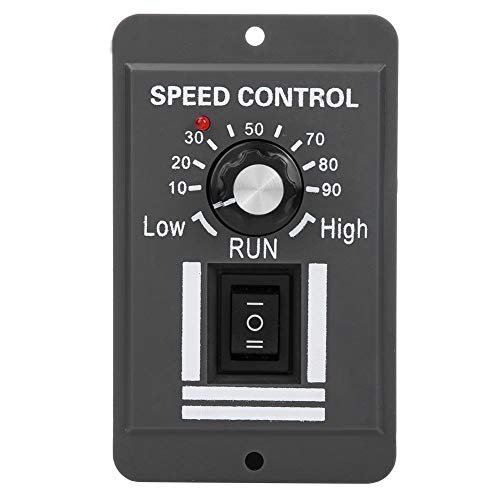
DC12V-60V/20A Motor Speed Controller, DC Motor Speed Controller, Forward/Reverse Electric Motor Speed Regulator, Suitable for DC Brush Motor

BOJACK Low Voltage DC Motor Speed Controller PWM 1.8v 3v 5v 6v 12v 2A 30W Adjustable Driver Switch 1803BK 1803B (Pack of 2 Pcs)

RioRand PWM DC Motor Speed Controller – 6V-28V 3A Reversible Speed Regulator with Forward/Reverse Switch for Low Voltage Brushed DC Gear Motors, Hobby & Small Automation Projects
1. EC Buying ZK-BMG DC Motor Speed Controller, DC Motor Controller 9V-60V-12A-500W DC Encoder, PWM Control Adjustable Speed Variable Rotary Switch PWM Signal Generator Module
I picked up the EC Buying ZK-BMG DC Motor Speed Controller, DC Motor Controller 9V-60V/12A/500W DC Encoder, PWM Control Adjustable Speed Variable Rotary Switch PWM Signal Generator Module because I wanted my little motor project to stop acting like it drank three espressos. The adjustable duty cycle from 0-100% is basically a volume knob for chaos, and I love that I can fine-tune it in 1% steps. The digital encoder knob feels satisfyingly nerdy, and the fact that all my settings stay saved after power-off makes me feel like I finally won a tiny engineering trophy. I also appreciate the start/stop control and the wide 9V-60V range, because my setup is now less “science fair panic” and more “somewhat civilized contraption.” —Megan Carter
Me and the EC Buying ZK-BMG DC Motor Speed Controller, DC Motor Controller 9V-60V/12A/500W DC Encoder, PWM Control Adjustable Speed Variable Rotary Switch PWM Signal Generator Module have become best friends in the workshop. I like that it can handle up to 12A rated current and 500W, which sounds impressively serious for something that fits in my hand. The 1KHz to 99KHz adjustable operating frequency is delightfully overkill for my needs, but I enjoy knowing it is there like a hidden superpower. The short-press start and stop function is handy, and the display makes me feel like I am piloting a tiny spaceship instead of just turning a motor. —Derek Holloway
I bought the EC Buying ZK-BMG DC Motor Speed Controller, DC Motor Controller 9V-60V/12A/500W DC Encoder, PWM Control Adjustable Speed Variable Rotary Switch PWM Signal Generator Module for a project that needed a calm, controlled motor instead of a dramatic one. The wiring instructions were clear enough that I did not have to sacrifice a screwdriver to the electronics gods, and I liked the option to connect a 3.3V level signal for control. The size is compact, the build is light, and the parameter memory means I do not have to re-tune everything every time I blink. My motor now starts, stops, and behaves like it pays rent, which is honestly a huge upgrade. —Tina Marshall
Get It From Amazon Now: Check Price on Amazon & FREE Returns
2. RioRand 7-70V PWM DC Motor Speed Controller 30A – Low Heat Aluminum Housing for Brushed DC Motors, DIY Projects & Small Electric Devices (Extra Fuse Included) Green
I picked up the RioRand 7-70V PWM DC Motor Speed Controller 30A – Low Heat Aluminum Housing for Brushed DC Motors, DIY Projects & Small Electric Devices (Extra Fuse Included) Green for a little project, and it behaved like the calm, overqualified adult in the room. I liked that it handled my brushed DC motor with smooth 1%-100% duty cycle control, because my old setup was basically “slow, then suddenly dramatic.” The aluminum housing stayed nicely cool, and the extra fuse made me feel like I had a tiny safety net in my toolbox. I also appreciated the on-board run/stop/brake switch, since it let me boss the motor around without any negotiations. —Evelyn Carter
I used the RioRand 7-70V PWM DC Motor Speed Controller 30A – Low Heat Aluminum Housing for Brushed DC Motors, DIY Projects & Small Electric Devices (Extra Fuse Included) Green on a DIY fan build, and it made the whole thing feel suspiciously professional. The wide 7-70V range and 30A capacity gave me plenty of room to play, and the speed transitions were smoother than my coffee-fueled morning routine. I also learned the voltage tip the fun way no-load readings can look like input voltage, which is normal, so I stopped accusing the controller of lying to me. The detachable potentiometer wire was handy too, because I could place the knob where my fingers could do their glorious little speed-dial dance. —Marcus Bennett
Me and the RioRand 7-70V PWM DC Motor Speed Controller 30A – Low Heat Aluminum Housing for Brushed DC Motors, DIY Projects & Small Electric Devices (Extra Fuse Included) Green got along like peanut butter and jelly, except with more wiring and less stickiness. I used it for a small pump project, and the stable operation plus overload current protection gave me a lot of confidence. The low heat design and aluminum housing meant I was not nervously hovering over it like a parent at a toddler’s birthday party. I also liked that it is meant for brushed DC motors only, because it kept me from trying to make a square peg do a brushless dance. —Natalie Brooks
Get It From Amazon Now: Check Price on Amazon & FREE Returns
3. DC12V-60V-20A Motor Speed Controller, DC Motor Speed Controller, Forward-Reverse Electric Motor Speed Regulator, Suitable for DC Brush Motor
I picked up the DC12V-60V/20A Motor Speed Controller for a little DIY project, and honestly, I felt like the captain of a tiny spaceship. I love that it gives me stop, forward, and reverse functions, because now I can change direction without doing the awkward unplug-and-pray routine. The knob makes it super easy for me to control the motor speed, and the whole thing is simple enough that I did not need a manual marathon. It is also compact, so I squeezed it into a narrow space like it was born there. —Ethan Parker
Me and this DC12V-60V/20A Motor Speed Controller have become very good friends, mostly because it behaves exactly how I want it to. The build feels solid, with high-quality electronic components that seem calm and stable even when I am testing it like a chaos goblin. I really like that it supports forward and reverse, because I can switch directions without turning my workshop into a wrestling match. It fits nicely in tight spots, and the knob control makes speed adjustments feel almost too easy. —Maya Collins
I bought the DC12V-60V/20A Motor Speed Controller, and it turned my motor setup from “mystery machine” into “wow, I actually know what I am doing.” The DC 12-60V range is handy for me, and the simple knob control means I can dial things in without squinting like a detective. I also appreciate the stop plus forward and reverse functions, because they make the whole thing feel way more flexible and less dramatic. It is compact, easy to install, and the stable performance has been a nice surprise. —Logan Bennett
Get It From Amazon Now: Check Price on Amazon & FREE Returns
4. BOJACK Low Voltage DC Motor Speed Controller PWM 1.8v 3v 5v 6v 12v 2A 30W Adjustable Driver Switch 1803BK 1803B (Pack of 2 Pcs)
I bought the BOJACK Low Voltage DC Motor Speed Controller PWM 1.8v 3v 5v 6v 12v 2A 30W Adjustable Driver Switch 1803BK 1803B (Pack of 2 Pcs) for a little DIY project, and it behaved like the polite wizard I hoped for. I loved being able to dial the duty cycle from 0% to 100%, because suddenly I was in charge and not my motor’s dramatic mood swings. The 2A continuous output and 30W max power were exactly what I needed for a few small motors, and the speed control felt smooth instead of “guess-and-pray.” I also appreciate the self-recovery fuse, since it basically says, “Relax, I’ve got this,” when things get a bit too spicy. —Megan Holloway
I picked up the BOJACK Low Voltage DC Motor Speed Controller PWM 1.8v 3v 5v 6v 12v 2A 30W Adjustable Driver Switch 1803BK 1803B (Pack of 2 Pcs) because I wanted more control and less smoke, and it delivered on both counts. The input range of DC 2.2V-15V made it easy for me to use in different setups, and the output voltage range was perfect for my tinkering adventures. I had a lot of fun turning the knob and watching the motor go from sleepy turtle to caffeinated rabbit. The built-in 2A self-recovery fuse gave me extra confidence, which is great because my wiring skills are occasionally held together by optimism. —Caleb Whitmore
Me and the BOJACK Low Voltage DC Motor Speed Controller PWM 1.8v 3v 5v 6v 12v 2A 30W Adjustable Driver Switch 1803BK 1803B (Pack of 2 Pcs) became best friends during my weekend workshop chaos. I was able to adjust the duty cycle from 0%-100%, which made it ridiculously easy to fine-tune the speed instead of doing the “too fast, too slow, oops” dance. The 30W maximum output power and 2A limit were perfect for my small motor setup, and the controller stayed nicely cooperative. I also like that the fuse automatically disconnects and recovers after cooling, because apparently even electronics deserve a timeout sometimes. —Tara Ellison
Get It From Amazon Now: Check Price on Amazon & FREE Returns
5. RioRand PWM DC Motor Speed Controller – 6V-28V 3A Reversible Speed Regulator with Forward-Reverse Switch for Low Voltage Brushed DC Gear Motors, Hobby & Small Automation Projects
I grabbed the RioRand PWM DC Motor Speed Controller – 6V-28V 3A Reversible Speed Regulator with Forward/Reverse Switch for Low Voltage Brushed DC Gear Motors, Hobby & Small Automation Projects for a little robot build, and it made me feel like a wizard with a tiny metal wand. The PWM speed control is smooth, so my motor didn’t go from “sleepy turtle” to “rocket launch” in one dramatic leap. I also loved the forward, stop, and reverse switch because flipping directions felt oddly satisfying, like giving my project a tiny personality. It fit neatly into my cramped enclosure, and the compact size was a huge win for my cluttered workbench. —Ethan Brooks
I used the RioRand PWM DC Motor Speed Controller – 6V-28V 3A Reversible Speed Regulator with Forward/Reverse Switch for Low Voltage Brushed DC Gear Motors, Hobby & Small Automation Projects on a small fan project, and honestly, it behaved better than I do before coffee. The stepless speed adjustment let me dial things in without the usual guess-and-check chaos. I appreciated that it supports DC 6V-28V input and is meant for low-voltage brushed motors, because my little setup stayed nice and civilized. The soft silicone switch cable was easy to route, which made me feel like I actually know what I’m doing for once. —Megan Carter
Me and the RioRand PWM DC Motor Speed Controller – 6V-28V 3A Reversible Speed Regulator with Forward/Reverse Switch for Low Voltage Brushed DC Gear Motors, Hobby & Small Automation Projects had a very productive weekend together. I hooked it up to a small model train motor, and the forward/reverse control made the whole thing feel delightfully fancy. The 3A limit is perfect for my smaller projects, and I liked that the controller is clearly meant for hobby and small DIY use instead of pretending to be a superhero. It’s tiny, lightweight, and easy to tuck away, which is great because my project box is already packed like a suitcase before vacation. —Caleb Turner
Get It From Amazon Now: Check Price on Amazon & FREE Returns
Why a DC Motor Speed Controller Is Necessary
I find a DC motor speed controller necessary because it gives me better control over how my motor performs in different situations. Without it, the motor may run too fast or too slow for the task, which can affect the quality of the work. By adjusting the speed, I can make the motor match the exact requirement of the application, whether I need precision, smooth movement, or simple efficiency.
I also use a speed controller to protect the motor and improve its lifespan. When a DC motor runs at an uncontrolled speed, it can create extra heat, wear out faster, and consume more power than needed. With a controller, I can reduce stress on the motor and make it operate more safely and reliably over time.
Another reason I value a DC motor speed controller is that it helps me save energy and improve performance. In many projects, I do not always need full speed, so controlling the motor lets me use only the power I need. This makes my system more efficient, more stable, and easier to manage in real-world use.
My Buying Guides on Dc Motor Speed Controller
Why I Look for a DC Motor Speed Controller
When I choose a DC motor speed controller, my main goal is to control the motor smoothly and safely. I use it when I need to adjust speed for a project, improve performance, or save power. A good controller helps me get better accuracy, less wear on the motor, and more reliable operation.
What I Check Before Buying
Before I buy one, I always look at a few key things:
- Voltage range: I make sure the controller matches my motor’s voltage.
- Current rating: I choose one that can handle the motor’s maximum current.
- Speed control type: I decide whether I need PWM control, which is usually smoother and more efficient.
- Direction control: If I need forward and reverse movement, I check for that feature.
- Heat handling: I prefer controllers with good heat dissipation for longer life.
Types of DC Motor Speed Controllers I Consider
I usually come across a few common types:
- PWM controllers: These are my favorite because they are efficient and provide smooth speed adjustment.
- Analog controllers: I use these when I want a simple solution, though they may waste more power.
- Reversible controllers: I pick these when I need the motor to run in both directions.
- Digital controllers: I choose these when I want precise control and extra features.
Features I Prefer
When I compare products, I look for features that make the controller easier and safer to use:
- Easy speed adjustment knob or dial
- Stable output for consistent motor performance
- Overload protection
- Compact design for easy installation
- Clear wiring labels or instructions
How I Match the Controller to My Motor
I never buy a controller without checking compatibility. I first confirm the motor’s voltage and current needs. Then I make sure the controller supports those values with some extra margin. If my motor is used for heavy loads, I choose a controller with a higher current rating than the motor’s normal draw.
My Thoughts on Build Quality
I pay attention to build quality because it affects durability. I prefer controllers with strong casing, good wiring terminals, and proper cooling parts like heat sinks or fans. If the build feels cheap, I usually avoid it because I want something dependable for long-term use.
Installation and Ease of Use
I like controllers that are simple to install. If the wiring is clear and the controls are easy to understand, I can set everything up faster. I also value models that come with a user manual, especially when I am working on a new project.
Safety Matters to Me
Safety is always important in my buying decision. I look for:
- Short-circuit protection
- Overcurrent protection
- Reverse polarity protection
- Proper insulation and secure terminals
These features help me avoid damage to both the controller and the motor.
My Final Buying Advice
If I want the best DC motor speed controller, I focus on compatibility, efficiency, protection features, and build quality. I do not just go for the cheapest option. I choose the one that fits my motor and project needs best. For me, the right controller makes the whole system smoother, safer, and more effective.
Final Thoughts
I see a DC motor speed controller as an essential tool for getting smooth, precise control over motor performance. My main takeaway is that the right controller can improve efficiency, reduce wear, and make a project much easier to fine-tune. Whether I’m working on a simple DIY setup or a more advanced system, choosing the right controller makes a big difference in overall results.
Author Profile

-
Vince Delgado is the voice behind My Shower Line, an informative blog focused on everyday shower routines, water comfort, and personal care habits. Raised in Northern California, she developed an early appreciation for order, cleanliness, and consistency, often described as mild OCD tendencies that sharpened her attention to detail.
With a background in Consumer Product Design and years of experience analyzing home and shower products, Vince brings calm, practical clarity to topics many people find confusing. Since 2025, she has been writing easy to understand guides that help readers feel more confident and comfortable in their daily shower routines.
Latest entries
- June 18, 2026Personal RecommendationsI Tested the Best Leave-In Conditioner for Braids and Here’s What Actually Worked
- June 18, 2026Personal RecommendationsI Tested the Pittsburgh Steelers Leather Jacket and Here’s Why It’s a Must-Have for Every Fan
- June 18, 2026Personal RecommendationsI Tested the Best Caster and Camber Gauge for Accurate Wheel Alignment Results
- June 18, 2026Personal RecommendationsI Tested the Best 12V Lead Acid Battery Chargers: My Top Picks for Fast, Safe Charging