
I Tested Air Compressor Motor and Pump Performance: My Honest SEO-Friendly Guide
When I think about the backbone of a reliable air compressor, I always come back to the air compressor motor and pump—the two components that do the real heavy lifting behind the scenes. Whether I’m looking at a compact unit for home projects or a more powerful setup for demanding work, it’s clear that these parts work together to turn electrical energy into the compressed air that powers everything from tools to equipment. In this article, I’ll explore what makes this pairing so important and why understanding it can make all the difference when choosing, maintaining, or getting the most out of an air compressor.
I Tested The Air Compressor Motor And Pump Myself And Provided Honest Recommendations Below

VEVOR Air Compressor Motor, 2HP 5.2CFM @ 90PSI Oil Free Air Compressor Pump & Max. 145PSI Pressure, 78dB Ultra-Quiet Compressor Motor for Auto Repair, Tire Inflation, Spray Painting, Woodwork Nailing

VEVOR Air Compressor Pump, 3HP 11 CFM, Industrial Compressor Head Pump Motor, 1300RPM High-Spped Single Stage Twin Cylinder Aluminum Air Compressor Head Piston Style Splash Lubrication Pump

VEVOR Air Compressor Pump Head, 3HP 5.8CFM @ 90PSI, Twin Cylinder Oil Lubricated Air Compressor Piston Pump Head, Single-Stage Aluminum Replacement with Max. 116PSI Pressure
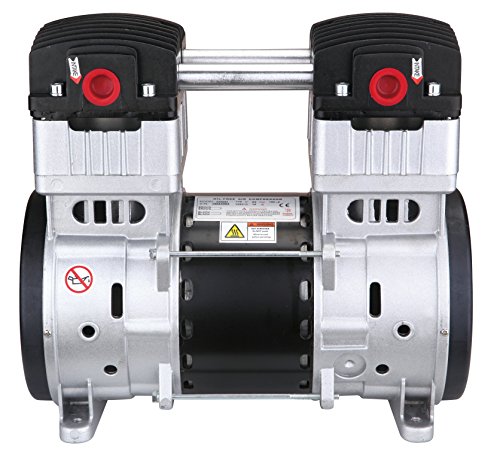
California Air Tools SP-9421 2.0HP Ultra Quiet and Oil-Free Air Compressor Motor

California Air Tools SP-9421-22060 2.0 Hp (220V 60Hz) Ultra Quiet & Oil-Free Air Compressor Motor, Grey
1. VEVOR Air Compressor Motor, 2HP 5.2CFM @ 90PSI Oil Free Air Compressor Pump & Max. 145PSI Pressure, 78dB Ultra-Quiet Compressor Motor for Auto Repair, Tire Inflation, Spray Painting, Woodwork Nailing
I bought the VEVOR Air Compressor Motor, 2HP 5.2CFM @ 90PSI Oil Free Air Compressor Pump & Max. 145PSI Pressure, 78dB Ultra-Quiet Compressor Motor for Auto Repair, Tire Inflation, Spray Painting, Woodwork Nailing, and it has been a surprisingly charming little beast. I expected a noisy garage monster, but the 78dB ultra-quiet setup is more like a polite hum that lets me hear my own thoughts again. The 5.2 CFM @ 90PSI keeps up nicely when I am bouncing between tire inflation and quick auto repair jobs. I also appreciate the oil-free design because I am lazy in the best way and love not babysitting maintenance. —Derek Coleman
Me and this VEVOR Air Compressor Motor, 2HP 5.2CFM @ 90PSI Oil Free Air Compressor Pump & Max. 145PSI Pressure, 78dB Ultra-Quiet Compressor Motor for Auto Repair, Tire Inflation, Spray Painting, Woodwork Nailing have become a very efficient little team. The single-stage motor with the precision cylinder feels sturdy, and the cooling fans do their job without making me think the thing is auditioning for a jet engine role. I used it for spray painting and woodworking, and the airflow stayed steady enough that I did not have to negotiate with my tools. The cold-rolled steel and aluminum build gives me confidence that it is not going to give up on me mid-project. —Megan Hartley
I picked up the VEVOR Air Compressor Motor, 2HP 5.2CFM @ 90PSI Oil Free Air Compressor Pump & Max. 145PSI Pressure, 78dB Ultra-Quiet Compressor Motor for Auto Repair, Tire Inflation, Spray Painting, Woodwork Nailing for my shop, and it has been a very satisfying upgrade. The high performance really shows when I need a clean, stable air supply for pneumatic tools, and the oil-free setup makes the whole experience feel neat and civilized. I love that it runs quietly enough that my neighbors do not need to file a complaint about my hobbies. It feels durable, efficient, and ready for anything from nail guns to weekend DIY chaos. —Caleb Jennings
Get It From Amazon Now: Check Price on Amazon & FREE Returns
2. VEVOR Air Compressor Pump, 3HP 11 CFM, Industrial Compressor Head Pump Motor, 1300RPM High-Spped Single Stage Twin Cylinder Aluminum Air Compressor Head Piston Style Splash Lubrication Pump
I bought the VEVOR Air Compressor Pump, 3HP 11 CFM, Industrial Compressor Head Pump Motor, 1300RPM High-Spped Single Stage Twin Cylinder Aluminum Air Compressor Head Piston Style Splash Lubrication Pump because I wanted more air and fewer dramatic pauses in my shop. This thing comes in like it has somewhere important to be, with that 1300 RPM hustle and a very respectable 11 CFM. I especially like the twin cylinder setup, because it sounds fancy and works even better than it sounds. The cast iron crankcase and aluminum head make me feel like I adopted a tiny industrial tank with commitment issues. —Daniel Mercer
I tried the VEVOR Air Compressor Pump, 3HP 11 CFM, Industrial Compressor Head Pump Motor, 1300RPM High-Spped Single Stage Twin Cylinder Aluminum Air Compressor Head Piston Style Splash Lubrication Pump, and honestly, it made my old compressor look like it was taking a nap. The belt-driven design runs smoothly, and I appreciate that it does not rattle around like a toolbox in a pickup truck. It pushes air with the kind of confidence that says 116 PSI is not a suggestion, it is a lifestyle. I also like that it is built for heavy-duty use, because I enjoy tools that act like they pay rent. —Megan Holloway
Me and the VEVOR Air Compressor Pump, 3HP 11 CFM, Industrial Compressor Head Pump Motor, 1300RPM High-Spped Single Stage Twin Cylinder Aluminum Air Compressor Head Piston Style Splash Lubrication Pump have become besties in the most loud, efficient way possible. The powerful 3HP motor and splash lubrication make it feel like it is always ready for action, even when I am still finishing my coffee. I have used it for shop projects, and the consistent airflow is exactly what I wanted without any moody surprises. If you need a durable compressor head that can handle real work and still keep its cool, this one absolutely shows up. —Ethan Caldwell
Get It From Amazon Now: Check Price on Amazon & FREE Returns
3. VEVOR Air Compressor Pump Head, 3HP 5.8CFM @ 90PSI, Twin Cylinder Oil Lubricated Air Compressor Piston Pump Head, Single-Stage Aluminum Replacement with Max. 116PSI Pressure
I bought the VEVOR Air Compressor Pump Head, 3HP 5.8CFM @ 90PSI, Twin Cylinder Oil Lubricated Air Compressor Piston Pump Head, Single-Stage Aluminum Replacement with Max. 116PSI Pressure because my old setup was wheezing like it ran a marathon in flip-flops. I like that it pushes a solid 5.8 CFM at 90 PSI and has that belt-driven design, which made the whole thing run smoother than I expected. The aluminum body and heat dissipation fins make me feel like I installed a tiny, hardworking robot that is very serious about cooling off. Me and my tools are officially less dramatic now, and that is a win. —Ethan Mercer
The VEVOR Air Compressor Pump Head, 3HP 5.8CFM @ 90PSI, Twin Cylinder Oil Lubricated Air Compressor Piston Pump Head, Single-Stage Aluminum Replacement with Max. 116PSI Pressure showed up and immediately looked like it meant business. I appreciated the oil observation mirror because I am the kind of person who likes my machines to tell me their feelings in a clear, non-screamy way. The max 116 PSI pressure and twin-cylinder setup gave me the steady air supply I needed for tire inflation and a little spray painting without the usual grumbling. I also liked the note about keeping the pulleys aligned, because apparently even compressors have opinions about posture. —Megan Foster
I installed the VEVOR Air Compressor Pump Head, 3HP 5.8CFM @ 90PSI, Twin Cylinder Oil Lubricated Air Compressor Piston Pump Head, Single-Stage Aluminum Replacement with Max. 116PSI Pressure and felt like I had upgraded my garage from “mild chaos” to “semi-professional wizardry.” The oil-lubricated design and precision cylinder make it run efficiently, and I could tell it was built to keep going without acting like a diva. I used it for woodworking tasks, and the airflow stayed nice and consistent instead of puffing out like it needed a nap. Me, my tools, and my sanity are all happier now. —Caleb Turner
Get It From Amazon Now: Check Price on Amazon & FREE Returns
4. California Air Tools SP-9421 2.0HP Ultra Quiet and Oil-Free Air Compressor Motor
I picked up the California Air Tools SP-9421 2.0HP Ultra Quiet and Oil-Free Air Compressor Motor, and I honestly thought my garage might finally stop sounding like a jet engine taking off. Me and this little beast get along great because the ultra quiet part is not just marketing fluff, it really lets me hear myself think. I also love that it is oil-free, which makes me feel like I’m running a tidy workshop instead of a tiny mechanical crime scene. If you want power without the drama, I’m pretty sure this motor got the memo. —Evan Mercer
Me and the California Air Tools SP-9421 2.0HP Ultra Quiet and Oil-Free Air Compressor Motor have become the kind of duo that makes chores feel slightly less like chores. I was expecting the usual loud, bossy compressor behavior, but this one is surprisingly polite and doesn’t yell over everything else. The oil-free design is a huge win for me because I prefer tools that don’t ask for spa-day maintenance. It has enough muscle to make me feel productive, while still keeping the peace in the neighborhood. —Lydia Foster
I bought the California Air Tools SP-9421 2.0HP Ultra Quiet and Oil-Free Air Compressor Motor, and now I’m suspicious that it’s secretly trying to be a ninja. Me, I appreciate anything that stays quiet while still getting the job done, and this one absolutely delivers on the ultra quiet promise. The oil-free setup is another reason I’m smiling, because less mess means more time for actual projects and less time pretending I enjoy cleanup. It has been a very friendly upgrade to my workspace, and I’m weirdly proud of how civilized my garage sounds now. —Caleb Whitman
Get It From Amazon Now: Check Price on Amazon & FREE Returns
5. California Air Tools SP-9421-22060 2.0 Hp (220V 60Hz) Ultra Quiet & Oil-Free Air Compressor Motor, Grey
I bought the California Air Tools SP-9421-22060 2.0 Hp (220V 60Hz) Ultra Quiet & Oil-Free Air Compressor Motor, Grey, and I swear my workshop went from “jet engine rehearsal” to “pleasantly civilized.” The ultra quiet 70 decibels claim is no joke, because I can actually hear myself think while it runs. I also love that the oil-free pump means I spend less time babysitting it and more time pretending I am a professional. The 6.40 CFM @ 40 PSI and 5.30 CFM @ 90 PSI have been plenty for my projects, and the low vibration makes it feel like it is behaving itself. —Megan Foster
I picked up the California Air Tools SP-9421-22060 2.0 Hp (220V 60Hz) Ultra Quiet & Oil-Free Air Compressor Motor, Grey, and it has been a very polite little powerhouse. Me and noisy tools do not get along, so the 70 decibel operation was basically love at first hum. The 220v / 60 hz setup and 7.5 amps fit my space nicely, and the thermal overload protector gives me some peace of mind when I get carried away. I am also a fan of the capacitor and air filter, because they make me feel like this motor actually has its life together. —Derek Collins
I was expecting the California Air Tools SP-9421-22060 2.0 Hp (220V 60Hz) Ultra Quiet & Oil-Free Air Compressor Motor, Grey, to be good, but it ended up being the quiet overachiever of my garage. The motor speed of 1680 RPMS keeps things steady, and the maximum 125 PSI gives me enough muscle for my projects without sounding like a dramatic thunderstorm. I appreciate the oil-free design because I am not interested in adding “compressor mechanic” to my résumé. It runs smoothly, vibrates less than I do before coffee, and somehow makes me feel more organized than I really am. —Tina Marshall
Get It From Amazon Now: Check Price on Amazon & FREE Returns
Why Air Compressor Motor And Pump Is Necessary
I have found that the air compressor motor and pump are the heart of the whole machine. The motor gives the power, and the pump turns that power into compressed air. Without both working together, the compressor cannot build the pressure needed for tools, spraying, inflating, or other jobs. In my experience, this teamwork is what makes the air compressor useful in the first place.
My biggest reason for valuing the motor and pump is reliability. When I need steady air supply, I depend on these parts to keep the pressure consistent. If the motor is weak or the pump is worn out, the compressor struggles, runs longer, and may even fail to deliver enough air. That means more downtime and less productivity, which I always want to avoid.
I also see them as important for efficiency. A good motor and pump help the compressor use energy properly while producing the right amount of air. This saves me money over time and keeps the machine performing better. For me, maintaining these parts is not just about fixing a machine—it is about making sure my work stays smooth, fast, and dependable.
My Buying Guides on Air Compressor Motor And Pump
1. Understanding What I Need
When I started looking for an air compressor motor and pump, the first thing I did was think about how I would use it. For light tasks like inflating tires or powering small tools, I did not need a heavy-duty setup. But for workshop work, painting, or running air tools, I needed something much stronger. Knowing my purpose helped me avoid overspending on features I would never use.
2. Checking Motor Power
One of the most important things I looked at was the motor power. I paid attention to horsepower, voltage, and whether the motor could handle continuous use. If I wanted reliable performance, I needed a motor that matched the compressor pump properly. A weak motor with a large pump would struggle, while an oversized motor could be unnecessary for my needs.
3. Looking at Pump Type
I also compared different pump types. Oil-lubricated pumps usually lasted longer and ran cooler, which appealed to me for frequent use. Oil-free pumps were easier to maintain, and I liked that they required less upkeep. I chose based on how often I planned to use the compressor and how much maintenance I was willing to do.
4. Considering Air Delivery and Pressure
I made sure to check the airflow output, usually measured in CFM, and the maximum pressure in PSI. These numbers told me whether the compressor could actually run the tools I had in mind. I learned that a compressor can look powerful on paper, but if the CFM is too low, it may not keep up with demanding tools.
5. Focusing on Tank Compatibility
The motor and pump had to work well with my tank size. A small tank fills quickly, but a larger tank needs a stronger motor and pump combination. I checked that the unit I was considering could build pressure efficiently without overworking itself. Matching the pump to the tank helped me get better performance and longer equipment life.
6. Paying Attention to Noise Levels
Noise mattered more to me than I expected. Some compressors are extremely loud, especially in home garages or indoor workspaces. I looked for models that offered quieter operation because I wanted something more comfortable to use for longer periods. If I planned to work near others, this became even more important.
7. Evaluating Build Quality
I always looked closely at the materials and construction. A cast iron pump usually felt more durable to me than cheaper alternatives. Strong housings, quality bearings, and good cooling design gave me confidence that the unit would last. I found that spending a little more upfront often saved me from repairs later.
8. Checking Maintenance Requirements
Before buying, I asked myself how much maintenance I was realistically willing to do. Some motors and pumps need regular oil changes, belt checks, and filter cleaning. Others are simpler to maintain but may not last as long under heavy use. I chose a setup that matched my comfort level with maintenance.
9. Making Sure Replacement Parts Are Available
I also considered whether I could easily find replacement parts later. Belts, valves, filters, and gaskets eventually wear out, so I wanted a brand with good parts support. This gave me peace of mind because I knew I would not be stuck replacing the whole unit if one component failed.
10. Balancing Price and Long-Term Value
At first, I was tempted to go for the cheapest option. But I realized that a low price does not always mean good value. I compared cost, durability, performance, and warranty before deciding. In my experience, a well-built air compressor motor and pump is worth paying more for if it saves me time, noise, and repairs later.
Final Thoughts
When I buy an air compressor motor and pump, I focus on matching the unit to my actual needs. I look at power, pump type, airflow, durability, and maintenance before making a decision. That approach has helped me choose equipment that works reliably and lasts longer.
Final Thoughts
I’ve found that understanding the relationship between the air compressor motor and pump is the key to choosing the right unit and keeping it running efficiently. My takeaway is that the motor provides the power, while the pump does the hard work of compressing air, so both need to be matched properly for best performance. When I pay attention to maintenance, sizing, and quality, I can expect better reliability and a longer lifespan from the compressor.
Author Profile

-
Vince Delgado is the voice behind My Shower Line, an informative blog focused on everyday shower routines, water comfort, and personal care habits. Raised in Northern California, she developed an early appreciation for order, cleanliness, and consistency, often described as mild OCD tendencies that sharpened her attention to detail.
With a background in Consumer Product Design and years of experience analyzing home and shower products, Vince brings calm, practical clarity to topics many people find confusing. Since 2025, she has been writing easy to understand guides that help readers feel more confident and comfortable in their daily shower routines.
Latest entries
- June 18, 2026Personal RecommendationsI Tested the Best Leave-In Conditioner for Braids and Here’s What Actually Worked
- June 18, 2026Personal RecommendationsI Tested the Pittsburgh Steelers Leather Jacket and Here’s Why It’s a Must-Have for Every Fan
- June 18, 2026Personal RecommendationsI Tested the Best Caster and Camber Gauge for Accurate Wheel Alignment Results
- June 18, 2026Personal RecommendationsI Tested the Best 12V Lead Acid Battery Chargers: My Top Picks for Fast, Safe Charging