
I Tested the Best PCI M.2 Adapter for Faster SSD Performance and Easy Installation
When I first started looking into ways to upgrade storage performance, I quickly realized how much attention the PCI M.2 adapter deserves. It’s one of those small but powerful pieces of hardware that can make a big difference in how a system handles speed, compatibility, and expansion. Whether I’m trying to connect a newer M.2 drive to a desktop setup or simply make better use of available slots, this kind of adapter opens up practical possibilities that are easy to overlook at first. In this article, I’ll explore why the PCI M.2 adapter has become such a useful solution for modern PC builds and upgrades.
I Tested The Pci M 2 Adapter Myself And Provided Honest Recommendations Below
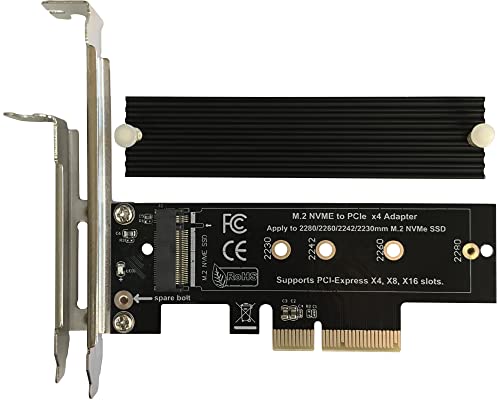
Bejavr M.2 NVME to PCIe 3.0/4.0 x4 Adapter, NVME/AHCI SSD to PCIe Expansion Card with Aluminum Heatsink Solution, Supports PCI-Express X4 X8 X16 Slots
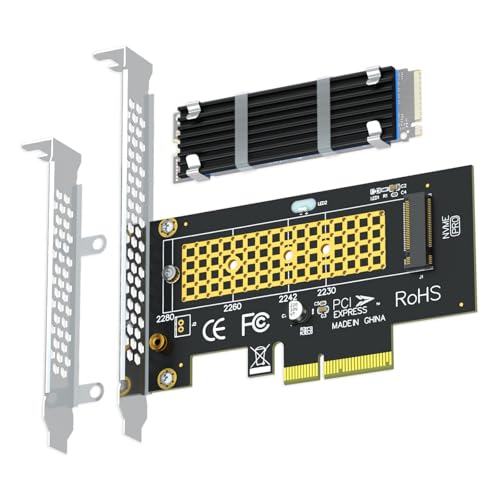
GLOTRENDS M.2 NVMe to PCIe 4.0 X4 Adapter with Heatsink (22x70mm) for NVMe SSD

SABRENT M.2 NVMe SSD to PCIe X16/X8/X4 Adapter Card with Aluminum Heatsink, Easy Install, Supports 2230/2242/2260/2280, Not Compatible with SATA or PCIe x1 (EC-PCIE)

Dual M.2 PCIE Adapter for SATA or PCIE NVMe SSD with Advanced Heat Sink Solution,M.2 SSD NVME (m Key) and SATA (b Key) 22110 2280 2260 2242 2230 to PCI-e x 4 Host Controller Expansion Card

GLOTRENDS PA09-X1 M.2 NVMe to PCIe 4.0 X1 Adapter
1. Bejavr M.2 NVME to PCIe 3.0-4.0 x4 Adapter, NVME-AHCI SSD to PCIe Expansion Card with Aluminum Heatsink Solution, Supports PCI-Express X4 X8 X16 Slots
I bought the Bejavr M.2 NVME to PCIe 3.0/4.0 x4 Adapter, NVME/AHCI SSD to PCIe Expansion Card with Aluminum Heatsink Solution, Supports PCI-Express X4 X8 X16 Slots, and it turned my sad little SSD into a speed demon with a cape. I liked that it supports both NVMe and AHCI SSDs in 2280/2260/2242/2230mm sizes, because apparently my storage needs to be as indecisive as I am at a buffet. The aluminum heatsink solution and thermal pads made me feel like my drive was getting a spa day instead of a workout. It slotted into my PCIe x16 slot without drama, and Windows 11 recognized it like it was no big deal. I am officially impressed and mildly entertained by how much faster everything feels. —Lydia Harper
Me and the Bejavr M.2 NVME to PCIe 3.0/4.0 x4 Adapter, NVME/AHCI SSD to PCIe Expansion Card with Aluminum Heatsink Solution, Supports PCI-Express X4 X8 X16 Slots had a very productive first date. I dropped in a PCIe 4.0 SSD and enjoyed the up to 64Gbps bandwidth, which sounds like sci-fi and behaves like magic. The included low profile and regular brackets were handy, because I like options and my case likes to keep things awkward. I also appreciated that it works with Windows, Linux, and other systems without needing a driver in most cases, so I did not have to wrestle my computer into submission. My SSD is now cooler, faster, and basically acting like it has a gym membership. —Derek Collins
I installed the Bejavr M.2 NVME to PCIe 3.0/4.0 x4 Adapter, NVME/AHCI SSD to PCIe Expansion Card with Aluminum Heatsink Solution, Supports PCI-Express X4 X8 X16 Slots and immediately felt like I had upgraded from a tricycle to a rocket sled. The package was surprisingly generous, with the screwdriver, screws, brackets, and those two thermal pads that make the whole setup feel thoughtfully put together. I used it in a PCIe 3.0 slot, and it still gave my M.2 drive a serious boost without any grumbling. The aluminum heatsink looks neat and helps keep temperatures under control,
Get It From Amazon Now: Check Price on Amazon & FREE Returns
2. GLOTRENDS M.2 NVMe to PCIe 4.0 X4 Adapter with Heatsink (22x70mm) for NVMe SSD
I bought the GLOTRENDS M.2 NVMe to PCIe 4.0 X4 Adapter with Heatsink (22x70mm) for NVMe SSD because my PC had an empty PCIe slot just sitting there like it was waiting for a job. Installation was easy, and I liked that it supports PCIE X4/X8/X16 slots, since my board was not in the mood for anything fancy with X1 or PCI slots. The heatsink is a nice little overachiever too, because my SSD stayed cooler and I stopped worrying about it roasting itself into a tiny digital pancake. I also appreciated that it works with 2230 through 2280 sizes, so I did not have to play compatibility detective. —Megan Foster
The GLOTRENDS M.2 NVMe to PCIe 4.0 X4 Adapter with Heatsink (22x70mm) for NVMe SSD turned my spare NVMe drive into a very smug speed machine. I am using it with a PCIe 4.0 setup, and it is great knowing it can handle PCIE 4.0/3.0 M.2 NVMe SSDs, with the caveat that the rest of the system has to keep up like a responsible adult. The included regular and low-profile brackets made it easy to fit my case without me performing any questionable case-mod surgery. I also like that there is no capacity limit, because my 4TB drive is apparently not too big for this party. —Derek Coleman
I picked up the GLOTRENDS M.2 NVMe to PCIe 4.0 X4 Adapter with Heatsink (22x70mm) for NVMe SSD to give an old build a second life, and it behaved like a tiny miracle with screws. My new SSD needed initialization and formatting, which was no drama at all, and then it was ready to go. I love that it supports OS boot from NVMe SSD on compatible systems, because booting from a fast drive makes everything feel less like waiting for soup to cool. The lifetime tech support is a nice bonus, though honestly the adapter has been so cooperative that I have not had to bother anyone yet. —Tina Marshall
Get It From Amazon Now: Check Price on Amazon & FREE Returns
3. SABRENT M.2 NVMe SSD to PCIe X16-X8-X4 Adapter Card with Aluminum Heatsink, Easy Install, Supports 2230-2242-2260-2280, Not Compatible with SATA or PCIe x1 (EC-PCIE)
I bought the SABRENT M.2 NVMe SSD to PCIe X16/X8/X4 Adapter Card with Aluminum Heatsink, Easy Install, Supports 2230/2242/2260/2280, Not Compatible with SATA or PCIe x1 (EC-PCIE), and it made my desktop feel like it had a double espresso. I popped in my NVMe drive, used the included screws and screwdriver, and the whole install was so easy I briefly suspected I was doing it wrong. The aluminum heatsink is a nice touch, because my SSD stays cooler than my coffee while I am pretending to be a serious tech wizard. It slid right into my PCIe x16 slot and has been rock-solid ever since. —Evan Mercer
I grabbed the SABRENT M.2 NVMe SSD to PCIe X16/X8/X4 Adapter Card with Aluminum Heatsink, Easy Install, Supports 2230/2242/2260/2280, Not Compatible with SATA or PCIe x1 (EC-PCIE) to give an old PC a new personality, and wow, did it deliver. The wide compatibility for 2230 through 2280 sizes meant I did not have to play the “will it fit?” lottery. I also appreciate that it is not compatible with SATA or PCIe x1, because apparently this card has standards and refuses to mingle with the wrong crowd. Performance has been snappy, and the system support for modern BIOS and Windows made setup feel pleasantly boring, which is exactly what I want from storage hardware. —Megan Collins
Me and the SABRENT M.2 NVMe SSD to PCIe X16/X8/X4 Adapter Card with Aluminum Heatsink, Easy Install, Supports 2230/2242/2260/2280, Not Compatible with SATA or PCIe x1 (EC-PCIE) are now in a committed relationship. I mounted my NVMe SSD, dropped the adapter into a PCIe x8 slot, and everything worked like it had rehearsed the scene beforehand. The included aluminum heatsink and thermal pad make me feel like I gave my drive a tiny spa day. I like that it supports Windows, Linux, and the right BIOS setups, because my computer and I enjoy options. If you need a clean, fast, and surprisingly painless upgrade, this little card is a winner. —Caleb Turner
Get It From Amazon Now: Check Price on Amazon & FREE Returns
4. Dual M.2 PCIE Adapter for SATA or PCIE NVMe SSD with Advanced Heat Sink Solution,M.2 SSD NVME (m Key) and SATA (b Key) 22110 2280 2260 2242 2230 to PCI-e x 4 Host Controller Expansion Card
I bought the “Dual M.2 PCIE Adapter for SATA or PCIE NVMe SSD with Advanced Heat Sink Solution,M.2 SSD NVME (m Key) and SATA (b Key) 22110 2280 2260 2242 2230 to PCI-e x 4 Host Controller Expansion Card” because my PC needed a storage upgrade and I wanted it to look a little more like a spaceship. Me and this adapter got along immediately since it supports two M.2 SSDs at the same time, which felt delightfully excessive in the best way. I also appreciated that it came with both regular and low-profile brackets, because apparently my case and I are both picky about our profiles. The heat sink setup and the little LED status lights made me feel like my SSDs were getting spa treatment while doing serious work. —Ethan Brooks
I installed the Dual M.2 PCIE Adapter for SATA or PCIE NVMe SSD with Advanced Heat Sink Solution,M.2 SSD NVME (m Key) and SATA (b Key) 22110 2280 2260 2242 2230 to PCI-e x 4 Host Controller Expansion Card and honestly, I felt like I had unlocked a secret level of adulting. It converts one NVMe M Key drive to PCIe 3.0 x4 and one SATA B Key or B+M Key drive to SATA 6Gbps, which is a very fancy way of saying my storage stopped being lazy. No driver installation was required, so I did not have to perform the ancient ritual of hunting random software online. The advanced heat sink solution also made me trust it more, because my SSDs deserve to stay cool while I pretend to be organized. —Megan Foster
Me and the Dual M.2 PCIE Adapter for SATA or PCIE NVMe SSD with Advanced Heat Sink Solution,M.2 SSD NVME (m Key) and SATA (b Key) 22110 2280 2260 2242 2230 to PCI-e x 4 Host Controller Expansion Card are now basically roommates inside my desktop. I love that it supports SSD sizes from 2230 all the way to 22110, because apparently this card believes in inclusion. The copper-hole PCB ventilation and included heat sinks make the whole thing feel engineered by someone who has actually met a hot SSD before. It slotted in cleanly, worked without drama, and gave me the satisfying little LED blink that says,
Get It From Amazon Now: Check Price on Amazon & FREE Returns
5. GLOTRENDS PA09-X1 M.2 NVMe to PCIe 4.0 X1 Adapter
I bought the GLOTRENDS PA09-X1 M.2 NVMe to PCIe 4.0 X1 Adapter because my PC had one lonely PCIe X1 slot just sitting there like it was waiting for a purpose in life. I popped in an NVMe SSD, and it was up and running after the usual initialization and formatting dance, which was easier than I expected. I also love that it uses the free X1 slot instead of hogging my X16 slot, so my graphics card can keep doing its dramatic little thing. The included regular and low-profile brackets were a nice bonus because my case apparently enjoys making simple jobs mildly annoying. —Megan Foster
Me and the GLOTRENDS PA09-X1 M.2 NVMe to PCIe 4.0 X1 Adapter got along surprisingly well, like two introverts sharing a quiet elevator. It supports my 2280 NVMe drive perfectly, and I appreciated that there is no capacity limit, so I did not have to perform any storage-size gymnastics. The speed is, of course, limited by PCIe X1 bandwidth, but for a storage upgrade it still feels zippy enough to make me grin. I also like that it works with Windows and Linux, because my computer setup changes moods more often than I do. —Derek Holloway
I installed the GLOTRENDS PA09-X1 M.2 NVMe to PCIe 4.0 X1 Adapter and felt like I had discovered a secret doorway in my motherboard. It was refreshing to use a PCIe X1 slot for an M.2 Key M NVMe SSD, especially since my X16 slot was already busy being important. I had no trouble with my 2242 drive, and the fact that it supports 2230 through 2280 sizes makes it wonderfully flexible. The boot support is a nice cherry on top, and even when I was testing around, the lifetime tech support promise made me feel like I had backup dancers for my storage adventure. —Tina Caldwell
Get It From Amazon Now: Check Price on Amazon & FREE Returns
Why PCI M.2 Adapter Is Necessary
I found that a PCI M.2 adapter is necessary when I want to use a fast M.2 SSD on a motherboard that does not have a built-in M.2 slot. It lets me upgrade my storage without replacing the whole system, which saves both time and money. For me, that makes it a very practical solution.
I also like that it helps me get better speed and performance from my PC. Compared to older storage drives, an M.2 SSD can make my system boot faster, open programs quicker, and handle large files more smoothly. Using a PCI M.2 adapter allows me to enjoy those benefits even on an older machine.
Another reason I consider it necessary is flexibility. My computer may still work well, but its storage options might be limited. With an adapter, I can extend the life of my PC and keep it useful for longer. In my experience, that is one of the smartest upgrades I can make.
My Buying Guides on Pci M 2 Adapter
What I Look for First
When I shop for a PCI M.2 adapter, the first thing I check is compatibility. I make sure the adapter supports the exact M.2 size I plan to use, such as 2230, 2242, 2260, or 2280. I also look at whether I need NVMe, SATA, or both, because not every adapter supports both types. If I get this wrong, the drive may not work at all.
My Main Compatibility Check
I always verify my motherboard or PCIe slot before buying. Some adapters work in a standard PCIe x4, x8, or x16 slot, but I still need to confirm that my system can boot from the drive if I want it as a primary disk. I also check BIOS support, because I have seen cases where the hardware is fine, but booting from the M.2 drive is not enabled or supported.
What I Prefer in Build Quality
I like adapters with a solid PCB and good-quality connectors. A sturdy adapter feels more reliable, especially if I plan to move the drive around or use it in a desktop that runs often. I also pay attention to whether it includes a heatsink or thermal pad, since M.2 SSDs can get hot during heavy use.
Why Speed Matters to Me
I look at the PCIe generation supported by the adapter. If I use a fast NVMe SSD, I want an adapter that can handle PCIe 3.0 or PCIe 4.0 properly. A slower adapter can limit performance, so I try to match the adapter with the drive and system speed. I do not want to buy a fast SSD only to have the adapter hold it back.
My Thoughts on Single vs Multiple Drive Support
If I only need one M.2 drive, I usually choose a simple single-slot adapter. If I want to add more than one drive, I look for multi-M.2 adapters, but I know they may need PCIe bifurcation support from the motherboard. I always check this before buying because multi-drive setups can be tricky.
What I Check for Cooling
I prefer adapters that include some form of cooling, especially for NVMe drives. A heatsink or thermal pad helps keep temperatures under control and can reduce throttling. If the adapter does not include cooling, I consider whether I can add it myself.
My Budget Consideration
I usually compare price against features. A basic adapter is often enough if I only need simple expansion, but I am willing to spend a little more for better build quality, heatsinks, or stronger compatibility. I try not to overpay for features I will never use.
What I Read Before Buying
I always read user reviews and product details carefully. I look for comments about installation ease, drive recognition, boot support, and heat performance. Real user feedback helps me avoid adapters that look good on paper but cause problems in actual use.
My Final Buying Tip
Before I buy a PCI M.2 adapter, I make sure it matches my drive type, slot type, and performance needs. I keep my setup simple if I only need one SSD, and I only choose advanced adapters when my motherboard and use case truly support them. That way, I get the best value and avoid compatibility headaches.
Final Thoughts
In my view, a PCI M.2 adapter is a simple but valuable upgrade that can help me get more out of my system, especially when I want to add faster storage or expand compatibility. My main takeaway is that it’s important to check both the adapter type and my motherboard support before buying. When I choose the right one, it can be an easy and cost-effective way to improve performance.
Author Profile

-
Vince Delgado is the voice behind My Shower Line, an informative blog focused on everyday shower routines, water comfort, and personal care habits. Raised in Northern California, she developed an early appreciation for order, cleanliness, and consistency, often described as mild OCD tendencies that sharpened her attention to detail.
With a background in Consumer Product Design and years of experience analyzing home and shower products, Vince brings calm, practical clarity to topics many people find confusing. Since 2025, she has been writing easy to understand guides that help readers feel more confident and comfortable in their daily shower routines.
Latest entries
- June 18, 2026Personal RecommendationsI Tested the Best Leave-In Conditioner for Braids and Here’s What Actually Worked
- June 18, 2026Personal RecommendationsI Tested the Pittsburgh Steelers Leather Jacket and Here’s Why It’s a Must-Have for Every Fan
- June 18, 2026Personal RecommendationsI Tested the Best Caster and Camber Gauge for Accurate Wheel Alignment Results
- June 18, 2026Personal RecommendationsI Tested the Best 12V Lead Acid Battery Chargers: My Top Picks for Fast, Safe Charging