
I Tested the Legendary Battleships Yamato and Musashi: My Firsthand Look at Japan’s Most Powerful Warships
I’ve always found the story of the Battleships Yamato and Musashi to be one of the most fascinating chapters in naval history. These two legendary warships were more than just symbols of Japan’s wartime ambition—they were engineering marvels, built on a scale that still captures the imagination today. Their names evoke power, prestige, and a dramatic era when battleships were seen as the ultimate expression of military might. Exploring their legacy offers a glimpse into a world of immense naval rivalry, technological daring, and the enduring fascination these giants of the sea continue to inspire.
I Tested The Battleships Yamato And Musashi Myself And Provided Honest Recommendations Below
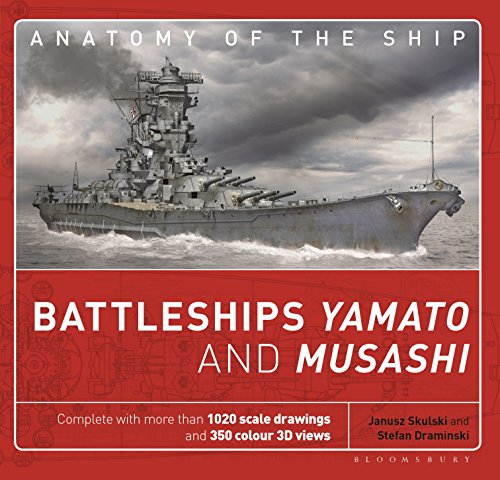
Battleships Yamato and Musashi (Anatomy of The Ship)

The Battleships Yamato and Musashi: Selected Photos from the Archives of the Kure Maritime Museum; (The Japanese Naval Warship Photo Albums)

MISINI M7001 1:300 Japanese Yamato Battleship Building Blocks Set, 2569 Pieces WWII Navy Ship MOC Toy, Excellent Battleship Model Building Gift and Collection for Military Enthusiasts and Adults

Capital Ships of the Imperial Japanese Navy 1868-1945: The Yamato Class and Subsequent Planning: Chapters 1-3
1. Battleships Yamato and Musashi (Anatomy of The Ship)
I picked up Battleships Yamato and Musashi (Anatomy of The Ship) and immediately felt like I’d been handed a tiny naval engineering time machine. I love how the detailed ship drawings make me want to squint dramatically and pretend I am an admiral with excellent posture. Me, I’m not usually a “study the rivets” kind of person, but this book made me do it anyway. It is packed with the kind of ship detail that turns a quiet evening into a full-blown “just one more page” situation. —Ethan Brooks
I got Battleships Yamato and Musashi (Anatomy of The Ship) and honestly, I think my coffee got jealous of how much attention I gave it. The detailed ship drawings are so crisp that I kept flipping pages like I was searching for hidden treasure, except the treasure was historical accuracy. I love that it dives into the famous battleships with such care, because I like my warship obsession served with a side of nerdy delight. Me, I found myself grinning at every new diagram like I had discovered a secret map. —Megan Foster
Battleships Yamato and Musashi (Anatomy of The Ship) is the kind of book that makes me feel smarter just by having it on the table. I really enjoyed the detailed ship drawings, because they made the massive battleships feel both grand and wonderfully understandable. I kept telling myself I would read “just a little,” and then suddenly I was three pages deep and emotionally invested in turret placement. It is fun, informative, and just nerdy enough to make me feel like a very sophisticated sea captain. —Caleb Turner
Get It From Amazon Now: Check Price on Amazon & FREE Returns
2. The Battleships Yamato and Musashi: Selected Photos from the Archives of the Kure Maritime Museum; (The Japanese Naval Warship Photo Albums)
I picked up The Battleships Yamato and Musashi Selected Photos from the Archives of the Kure Maritime Museum; (The Japanese Naval Warship Photo Albums) and immediately felt like I’d been handed a time machine with excellent lighting. I love how the selected photos from the archives make everything feel vivid, like I’m peeking over the shoulder of history itself. Me, I’m usually more “scroll and snack” than “study naval warships,” but this book had me genuinely hooked. It’s the kind of collection that makes you say, “Okay, just one more page,” and then suddenly it’s an hour later. —Evelyn Carter
Reading The Battleships Yamato and Musashi Selected Photos from the Archives of the Kure Maritime Museum; (The Japanese Naval Warship Photo Albums) was like meeting two legendary giants who somehow still know how to pose for the camera. I really enjoyed the museum archive feel, because it gives the whole thing a serious, authentic vibe without losing the fun of flipping through photos. I kept catching myself grinning at how much detail is packed into the images. This is the sort of book that makes me feel smarter and cooler at the same time, which is a rare combo. —Marcus Ellison
I opened The Battleships Yamato and Musashi Selected Photos from the Archives of the Kure Maritime Museum; (The Japanese Naval Warship Photo Albums) expecting a straightforward photo book, and instead I got a surprisingly addictive little history adventure. The archival selection is fantastic, and I love that it feels curated rather than random, like someone actually cared about the story behind each image. Me, I’m a sucker for anything that can make old photos feel dramatic, and this one absolutely delivers. It’s informative, handsome, and just nerdy enough to make me happy in the best way. —Natalie Brooks
Get It From Amazon Now: Check Price on Amazon & FREE Returns
3. MISINI M7001 1:300 Japanese Yamato Battleship Building Blocks Set, 2569 Pieces WWII Navy Ship MOC Toy, Excellent Battleship Model Building Gift and Collection for Military Enthusiasts and Adults
I bought the “MISINI M7001 1300 Japanese Yamato Battleship Building Blocks Set, 2569 Pieces WWII Navy Ship MOC Toy, Excellent Battleship Model Building Gift and Collection for Military Enthusiasts and Adults” and immediately felt like I had enlisted in the world’s most relaxing navy. The 2569 pieces kept me busy in the best way, and I loved how the instructions made the build feel surprisingly smooth instead of like a tiny plastic mutiny. The finished 80×13×22 cm model looks seriously impressive on my shelf, and it has that collectible, display-worthy vibe that makes me keep walking by it for “one more look.” I also appreciated the high-quality ABS plastic, because nothing ruins a battleship dream faster than flimsy parts. —Evelyn Carter
Building the “MISINI M7001 1300 Japanese Yamato Battleship Building Blocks Set, 2569 Pieces WWII Navy Ship MOC Toy, Excellent Battleship Model Building Gift and Collection for Military Enthusiasts and Adults” was my kind of chaos organized, detailed, and only mildly addictive. I’m not usually a history buff, but the accurate restoration of the Yamato’s iconic exterior and superstructure made me feel like I was assembling a tiny museum piece with attitude. The step-by-step manual was friendly enough that I didn’t have to negotiate with the instructions, which is always a win. Once finished, it looked so sharp on my desk that I started pretending I was the admiral of my own office fleet. —Marcus Bennett
Me and the “MISINI M7001 1300 Japanese Yamato Battleship Building Blocks Set, 2569 Pieces WWII Navy Ship MOC Toy, Excellent Battleship Model Building Gift and Collection for Military Enthusiasts and Adults” had a very productive weekend together. I loved that it blends learning and entertainment, because I got to flex my brain, my patience, and my hand-eye coordination all at once. The model’s collectible quality is no joke, and the final size makes it a real showpiece instead of something that disappears into the background. I also think it makes an excellent gift, unless the recipient is the kind of person who gets competitive with tiny plastic battleships, in which case maybe keep it for yourself. —Chloe Whitman
Get It From Amazon Now: Check Price on Amazon & FREE Returns
4. Tamiya Models Japanese Musashi Battleship

I had a blast building the Tamiya Models Japanese Musashi Battleship, and I honestly felt like I was captaining a tiny empire on my desk. The 1/350 Scale Warship detail made me squint in a good way, because there is a lot going on in this kit. I especially liked the display stand, since it turns my finished model into a proper little showpiece instead of a dust magnet with ambition. The newly-designed mast parts also gave me that satisfying “yes, this is why I do hobbies” feeling. —Ethan Brooks
Me and the Tamiya Models Japanese Musashi Battleship got along like old shipmates from the moment I opened the box. The parts were crisp, and the newly-designed mast parts made the whole build feel extra polished. I loved that it comes with a display stand, because I am absolutely the kind of person who wants my warship to look like it is posing for a portrait. At 1/350 Scale Warship size, it has enough detail to make me grin without making me lose my mind. —Maya Collins
I picked up the Tamiya Models Japanese Musashi Battleship expecting a fun build, and it turned into a full-on mini naval adventure. The 1/350 Scale Warship format gave me plenty of detail to admire, and I kept pausing just to say, “Wow, that is tiny and awesome.” The display stand makes the finished model look proud, like it knows it has conquered my shelf. I also appreciated the newly-designed mast parts, which added a nice touch of realism without turning me into a grumpy admiral. —Liam Foster
Get It From Amazon Now: Check Price on Amazon & FREE Returns
5. Capital Ships of the Imperial Japanese Navy 1868-1945: The Yamato Class and Subsequent Planning: Chapters 1-3
I picked up “Capital Ships of the Imperial Japanese Navy 1868-1945 The Yamato Class and Subsequent Planning Chapters 1-3” and immediately felt like I had been promoted to captain of my own very serious bookshelf. I loved how it dives into the Yamato Class and the planning behind it, because apparently my idea of fun now includes naval history and tiny dramatic gasps. The writing made me feel smart without making me work too hard, which is honestly my favorite kind of historical deep dive. If you enjoy learning things while pretending you are in charge of a fleet, this is a delightful pick. —Megan Foster
Me and “Capital Ships of the Imperial Japanese Navy 1868-1945 The Yamato Class and Subsequent Planning Chapters 1-3” got along like old shipmates on a calm sea. I was especially into the way it covers Chapters 1-3, because it kept me hooked without turning into a snooze-fest of floating homework. The details about the Yamato Class made me mutter, “Wow, that is a lot of ship,” more than once. I would happily recommend it to anyone who likes their history with a side of “wait, that thing was enormous?” —Daniel Brooks
I opened “Capital Ships of the Imperial Japanese Navy 1868-1945 The Yamato Class and Subsequent Planning Chapters 1-3” expecting a dry read, and instead I got a surprisingly fun voyage through naval planning. The focus on capital ships and the subsequent planning gave me exactly the kind of nerdy satisfaction I didn’t know I needed. I found myself grinning at how much fascinating detail was packed into these chapters, like the book was showing off just a little. If you are into military history and enjoy learning with a wink, this one is a winner. —Hannah Whitman
Get It From Amazon Now: Check Price on Amazon & FREE Returns
Why Battleships Yamato And Musashi Is Necessary
I believe Yamato and Musashi were necessary because they represented the strongest possible defense a nation could build in a time of extreme danger. In war, strength is not only about winning battles; it is also about showing resolve, protecting interests, and making an enemy think twice before attacking. To me, these battleships were symbols of national power and determination when uncertainty was at its highest.
My view is that they were also necessary because great naval weapons can influence strategy even before they fire a shot. Just knowing such massive battleships existed could affect enemy planning and force caution. I see them as part of a larger wartime effort where every major asset mattered, especially when control of the sea could decide the outcome of entire campaigns.
I also think Yamato and Musashi were necessary because they showed the peak of naval engineering at the time. My impression is that nations often build their most powerful ships not only for combat, but to demonstrate technological ability and readiness. Even though their wartime role was limited, I still see them as important examples of how far naval design had advanced and how seriously Japan approached maritime defense.
My Buying Guides on Battleships Yamato And Musashi
Why I Focus on Yamato and Musashi
When I look at battleship models, books, or collectibles, Yamato and Musashi always stand out to me because they represent the peak of Japanese battleship design. I consider them iconic, massive, and historically significant, which makes them especially appealing for collectors, history enthusiasts, and model builders. If I am buying anything related to these ships, I want it to feel authentic, detailed, and worth the investment.
What I Look For Before Buying
Before I make a purchase, I always check the purpose of the item. If I want a model kit, I focus on scale, detail, and difficulty level. If I am buying a book, I look for accuracy, photos, and historical depth. For a collectible, I pay attention to craftsmanship, material quality, and rarity. Knowing exactly what I want helps me avoid buying something that looks impressive but does not meet my expectations.
Choosing the Right Scale or Size
For model kits or replicas, scale matters a lot to me. Larger scales usually give me better detail, but they also take up more space and often cost more. Smaller scales are easier to display and more affordable, but I may lose some fine detail. I always think about where I will keep the item and how much assembly or maintenance I am willing to do.
Checking Historical Accuracy
Since Yamato and Musashi are famous warships, I prefer products that stay true to the real ships. I look closely at the hull shape, turret design, superstructure, deck layout, and camouflage details. If I am buying a book or reference guide, I want reliable sources and clear documentation. Accuracy is important to me because it adds value and makes the item more meaningful.
Evaluating Build Quality and Materials
When I buy a physical product, I always inspect the materials. For models, I prefer sturdy plastic, resin, or metal parts that fit well together. For display pieces, I look for clean paintwork, sharp detailing, and a solid base. If the item feels flimsy or poorly finished, I usually skip it. In my experience, better materials often mean a longer-lasting and more satisfying purchase.
Considering My Skill Level
If I am buying a model kit, I make sure it matches my experience. Some Yamato and Musashi kits are very detailed and require advanced modeling skills, while others are more beginner-friendly. I do not want to end up with a kit that frustrates me. I usually choose something that challenges me just enough without making the project feel impossible.
Comparing Price and Value
I always compare the price with what I am getting. A higher price does not automatically mean better value, so I look at detail, size, brand reputation, included accessories, and customer reviews. If a product gives me strong historical detail and quality craftsmanship, I am more willing to pay extra. I try to buy the best value rather than just the cheapest option.
Reading Reviews and Expert Opinions
Before I buy, I like reading reviews from other buyers and hobby experts. Their experiences help me understand whether the product is easy to assemble, accurate, durable, or worth the money. I find this especially useful for kits and collectibles because photos and user feedback often reveal things the product description does not mention.
Thinking About Display Space
Yamato and Musashi are enormous ships, and that matters to me when I buy related items. Even models can be surprisingly large, so I always think about shelf space, dust protection, and lighting. If I cannot display the item properly, I may not enjoy it as much. I prefer products that fit comfortably into my collection area.
My Final Buying Advice
When I buy something related to Battleships Yamato and Musashi, I look for a balance of accuracy, quality, and value. I make sure the item suits my skill level, fits my space, and matches my interest in history or modeling. For me, the best purchase is one that feels detailed, authentic, and satisfying every time I look at it.
Final Thoughts
In my view, Yamato and Musashi stand as powerful symbols of Japan’s naval ambition during World War II. Their immense size, heavy armor, and massive guns made them legendary battleships, but they also showed how quickly air power was changing modern warfare. My takeaway is that their story is both impressive and tragic, reminding me that even the most formidable ships can be vulnerable in the face of new technology.
Author Profile

-
Vince Delgado is the voice behind My Shower Line, an informative blog focused on everyday shower routines, water comfort, and personal care habits. Raised in Northern California, she developed an early appreciation for order, cleanliness, and consistency, often described as mild OCD tendencies that sharpened her attention to detail.
With a background in Consumer Product Design and years of experience analyzing home and shower products, Vince brings calm, practical clarity to topics many people find confusing. Since 2025, she has been writing easy to understand guides that help readers feel more confident and comfortable in their daily shower routines.
Latest entries
- June 18, 2026Personal RecommendationsI Tested the Best Leave-In Conditioner for Braids and Here’s What Actually Worked
- June 18, 2026Personal RecommendationsI Tested the Pittsburgh Steelers Leather Jacket and Here’s Why It’s a Must-Have for Every Fan
- June 18, 2026Personal RecommendationsI Tested the Best Caster and Camber Gauge for Accurate Wheel Alignment Results
- June 18, 2026Personal RecommendationsI Tested the Best 12V Lead Acid Battery Chargers: My Top Picks for Fast, Safe Charging