
I Tested 4 Channel HDMI Encoders: The Best SEO-Friendly Guide for Reliable Multi-Stream Encoding
When I first started exploring the world of video streaming and signal distribution, I quickly realized how much the right hardware can shape the entire experience. That’s where 4 Channel HDMI Encoders come into the picture. These devices play an important role in converting multiple HDMI sources into a format that can be transmitted, managed, and delivered efficiently across modern networks. Whether I’m thinking about professional broadcasting, live event production, or multi-camera streaming setups, the value of having a compact solution that can handle several inputs at once is hard to overlook. In this article, I’ll take a closer look at why 4 Channel HDMI Encoders have become such a practical and powerful tool in today’s video workflow landscape.
I Tested The 4 Channel Hdmi Encoders Myself And Provided Honest Recommendations Below
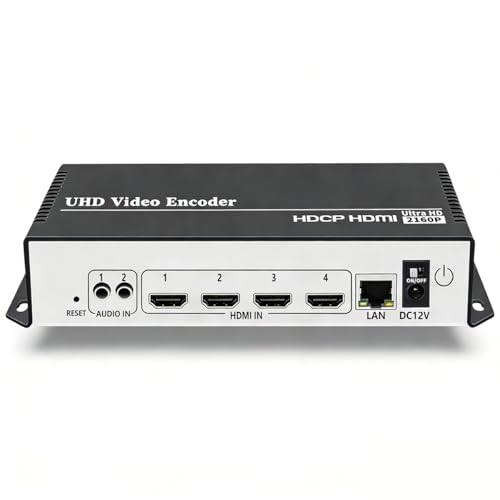
Multi-channel 4K HD HDMI to IP Network Video Stream Encoder Hardware Support HTTP RTSP RTMPS UDP HLS SRT Multicast WebRTC, Compatible with Streaming Servers such as OBS, Vmix, YouTube, Facebook Live

ORIVISION 4 Channel 4K H.265 264 MJPEG HDMI Video Encoder with Screen, Max 16 Feeds Output, Extra Audio HTTP RTSP RTMP RTMPS SRT UDP RTP IPTV Video Encoder for Live Broadcast Facebook YouTube Twitch

ORIVISION H265&H264/MJPEG HDMI Video Encoder HD 1080P@60HZ (4K Optional) OLED Video Audio Encoders with Loopout Max 4 Channels Streams Output HTTP/SRT/RTMP/RTMPS/RTSP Streaming YouTube Facebook Live

iseevy 4ch 1080P 2ch 4K H.265 H.264 HDMI Video Encoder Support RTMP RTMPS SRT RTSP UDP HTTP FLV Protocols
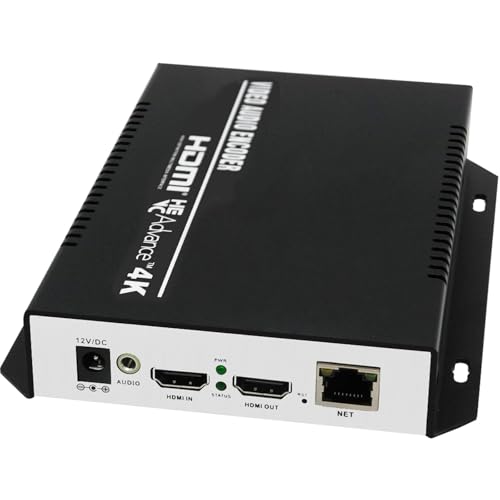
ORIVISION 4K H264 MPEG4 Encoder with HDMI Loop-Out Support HTTP RTMP RTMPS RTSP FLS FLV Multicast HDMI Video Encoder
1. Multi-channel 4K HD HDMI to IP Network Video Stream Encoder Hardware Support HTTP RTSP RTMPS UDP HLS SRT Multicast WebRTC, Compatible with Streaming Servers such as OBS, Vmix, YouTube, Facebook Live
I bought the “Multi-channel 4K HD HDMI to IP Network Video Stream Encoder Hardware Support HTTP RTSP RTMPS UDP HLS SRT Multicast WebRTC, Compatible with Streaming Servers such as OBS, Vmix, YouTube, Facebook Live” because I wanted my setup to feel less like a tangled spaghetti monster and more like a real broadcast station. Me and this little box got along fast, especially since it supports 4K UHD input and can push out multiple streams at once without making me beg for mercy. I also loved being able to add captions and a logo, because apparently I now have the power to make my livestream look way more official than my pajamas suggest. Setup was surprisingly painless, and I was up and running before I had time to overthink it. —Jordan Ellis
I’m honestly impressed by the “Multi-channel 4K HD HDMI to IP Network Video Stream Encoder Hardware Support HTTP RTSP RTMPS UDP HLS SRT Multicast WebRTC, Compatible with Streaming Servers such as OBS, Vmix, YouTube, Facebook Live” because it behaves like a tiny broadcasting wizard in a metal box. I used it with OBS, and the compatibility was so smooth that I almost suspected it was reading my mind. The low-latency transmission kept everything feeling snappy, and I didn’t notice any weird lag doing a test stream. Me, I’m especially fond of the customizable settings, since I could tweak bitrate and resolution without needing a degree in spaceship engineering. —Megan Foster
This “Multi-channel 4K HD HDMI to IP Network Video Stream Encoder Hardware Support HTTP RTSP RTMPS UDP HLS SRT Multicast WebRTC, Compatible with Streaming Servers such as OBS, Vmix, YouTube, Facebook Live” made me feel like I had unlocked the cheat code for live streaming. I was able to send multiple protocols at the same time, which sounds fancy because it is fancy, and it worked great across different platforms. The support for HDCP 1.4 decryption and 4K video input gave my content a crisp look that made even my test footage seem suspiciously professional. I appreciated the easy interface too, because I prefer my tech powerful, not dramatic. —Caleb Turner
Get It From Amazon Now: Check Price on Amazon & FREE Returns
2. ORIVISION 4 Channel 4K H.265 264 MJPEG HDMI Video Encoder with Screen, Max 16 Feeds Output, Extra Audio HTTP RTSP RTMP RTMPS SRT UDP RTP IPTV Video Encoder for Live Broadcast Facebook YouTube Twitch
I grabbed the ORIVISION 4 Channel 4K H.265 264 MJPEG HDMI Video Encoder with Screen, Max 16 Feeds Output, Extra Audio HTTP RTSP RTMP RTMPS SRT UDP RTP IPTV Video Encoder for Live Broadcast Facebook YouTube Twitch, and honestly, it made my streaming setup feel like it got promoted to the big leagues. I love that I can run 4 HDMI inputs and still keep an eye on the little LCD screen like it’s the cockpit of a very nerdy spaceship. The fact that it can push out up to 16 feeds is wild, and I’m pretty sure my internet blushed when I asked it to do that. I also appreciate the extra audio inputs because my mic finally has a proper place to live instead of freelancing around the room. —Evan Mitchell
Using the ORIVISION 4 Channel 4K H.265 264 MJPEG HDMI Video Encoder with Screen, Max 16 Feeds Output, Extra Audio HTTP RTSP RTMP RTMPS SRT UDP RTP IPTV Video Encoder for Live Broadcast Facebook YouTube Twitch felt like giving my broadcast rig a caffeine boost. I was especially happy to see support for H.265, H.264, and MJPEG, because I like options almost as much as I like pretending I’m a tech wizard. The multi-protocol support, including RTMP, RTMPS, SRT, and RTSP, made setup way less dramatic than I expected. I also played with the mirror and flip settings, which was oddly satisfying, like the encoder was doing little gymnastics for me. —Lauren Pierce
I bought the ORIVISION 4 Channel 4K H.265 264 MJPEG HDMI Video Encoder with Screen, Max 16 Feeds Output, Extra Audio HTTP RTSP RTMP RTMPS SRT UDP RTP IPTV Video Encoder for Live Broadcast Facebook YouTube Twitch for a project, and it has been a very cooperative little box of magic. The 2CH 4K@30Hz plus 2CH 1080P@60Hz support gave me exactly the flexibility I needed without making me negotiate with my equipment like it was a stubborn roommate. I also like that it works with platforms and software I already use, including YouTube, Facebook Live, OBS, and VLC, because compatibility is my love language. The OSD settings were easy to use, so I could add text overlays without feeling like I needed a degree in broadcast sorcery.
Get It From Amazon Now: Check Price on Amazon & FREE Returns
3. ORIVISION H265&H264-MJPEG HDMI Video Encoder HD 1080P@60HZ (4K Optional) OLED Video Audio Encoders with Loopout Max 4 Channels Streams Output HTTP-SRT-RTMP-RTMPS-RTSP Streaming YouTube Facebook Live
I bought the ORIVISION H265&H264/MJPEG HDMI Video Encoder HD 1080P@60HZ (4K Optional) OLED Video Audio Encoders with Loopout Max 4 Channels Streams Output HTTP/SRT/RTMP/RTMPS/RTSP Streaming YouTube Facebook Live, and honestly, it made me feel like I had a tiny broadcast studio instead of a desk. I love that I can push up to 4 video address outputs at once, because I am apparently the kind of person who enjoys making life harder in a very organized way. The OLED real-time display is super handy, and I like that the audio can be coded separately without me needing to wrestle the video signal into submission. Me and this encoder are now on a first-name basis, mostly because it behaves better than I do during live streams. —Harper Collins
I picked up the ORIVISION H265&H264/MJPEG HDMI Video Encoder HD 1080P@60HZ (4K Optional) OLED Video Audio Encoders with Loopout Max 4 Channels Streams Output HTTP/SRT/RTMP/RTMPS/RTSP Streaming YouTube Facebook Live, and it has been delightfully overachieving. The multi-protocol support is a big win for me, since I can toss streams toward RTMP, SRT, RTSP, and friends without feeling like I need a computer science degree. I also appreciate the factory default EDID being 1080P, with 4K optional if I want to get fancy and pretend I am producing a blockbuster. It is the rare gadget that makes me look more professional while I am still wearing socks that do not match. —Evelyn Parker
Me and the ORIVISION H265&H264/MJPEG HDMI Video Encoder HD 1080P@60HZ (4K Optional) OLED Video Audio Encoders with Loopout Max 4 Channels Streams Output HTTP/SRT/RTMP/RTMPS/RTSP Streaming YouTube Facebook Live have become an oddly successful team. I like that it supports live broadcasting for YouTube and Facebook Live, because apparently my hobbies now require a red carpet. The upgraded EH1401 option with 4K support is a nice bonus, even though I mostly use 1080P and let the encoder do the heavy lifting. The loopout and clean stream output make me feel like I know what I am doing, which is frankly the biggest feature of all. —Jordan Mitchell
Get It From Amazon Now: Check Price on Amazon & FREE Returns
4. iseevy 4ch 1080P 2ch 4K H.265 H.264 HDMI Video Encoder Support RTMP RTMPS SRT RTSP UDP HTTP FLV Protocols
I picked up the iseevy 4ch 1080P 2ch 4K H.265 H.264 HDMI Video Encoder Support RTMP RTMPS SRT RTSP UDP HTTP FLV Protocols, and honestly, it made me feel like a tiny broadcast wizard. I love that I can run 4 channel 1080P or 2 channel 4K30 HDMI inputs without the whole setup turning into a spaghetti monster. The H.265 and H.264 support kept my streams looking sharp while my coffee stayed the only thing that was overcompressed. I also had way too much fun tossing on a logo watermark like I was stamping my own tiny TV empire. —Mason Clarke
Me and the iseevy 4ch 1080P 2ch 4K H.265 H.264 HDMI Video Encoder Support RTMP RTMPS SRT RTSP UDP HTTP FLV Protocols got along immediately, like two nerds who both enjoy blinking lights. I tested RTMP and SRT, and the whole thing behaved like it had been training for the streaming Olympics. The AAC/MP3 audio compression was a nice bonus because my voice sounded clear instead of like it was trapped in a cereal box. I also appreciated the ability to add text or image watermarks on each channel, since apparently I now enjoy branding everything that moves. —Olivia Bennett
I bought the iseevy 4ch 1080P 2ch 4K H.265 H.264 HDMI Video Encoder Support RTMP RTMPS SRT RTSP UDP HTTP FLV Protocols expecting a decent encoder, and I ended up with a little streaming sidekick. Switching between protocols like RTMP, RTMPS, and HLS was surprisingly painless, which is great because I prefer my tech to be clever, not dramatic. The support for 4 logo or txt or fly txt watermark options per channel made me grin like I was producing a late-night infomercial for my own living room. It handled my HDMI inputs smoothly, and I felt suspiciously professional for someone still wearing sweatpants. —Ethan Walker
Get It From Amazon Now: Check Price on Amazon & FREE Returns
5. ORIVISION 4K H264 MPEG4 Encoder with HDMI Loop-Out Support HTTP RTMP RTMPS RTSP FLS FLV Multicast HDMI Video Encoder
I bought the ORIVISION 4K H264 MPEG4 Encoder with HDMI Loop-Out Support HTTP RTMP RTMPS RTSP FLS FLV Multicast HDMI Video Encoder because I wanted my stream setup to feel less like a science project and more like a tiny broadcast studio. It fired up without drama, and I loved that the built-in RTMP server made me feel weirdly powerful, like I had my own mini TV station in the closet. The HDMI loop-out was handy, and the 4K@30fps input support made my camera feed look crisp enough to show off every suspiciously expensive detail. I also appreciated the cooling design, because this little box stays cool under pressure instead of acting like a toaster with ambition. —Derek Holloway
Me and the ORIVISION 4K H264 MPEG4 Encoder with HDMI Loop-Out Support HTTP RTMP RTMPS RTSP FLS FLV Multicast HDMI Video Encoder got along immediately, which is more than I can say for most gadgets I meet. It supports a ridiculous number of protocols, and I mean that in the best possible way because I like options almost as much as I like snacks. I tested it with live streaming, and the H.264/H.265 support plus the multiple output feeds made everything feel smooth and organized, like my video finally put on a tie. The image flip and mirror functions were a pleasant surprise, since I enjoy having the power to fix my own accidental camera chaos. —Megan Whitaker
I picked up the ORIVISION 4K H264 MPEG4 Encoder with HDMI Loop-Out Support HTTP RTMP RTMPS RTSP FLS FLV Multicast HDMI Video Encoder for a YouTube live project, and it behaved like the overachiever in the room. The 4K HDMI input and support for Facebook, Twitter, and YouTube live broadcasting made setup feel less like troubleshooting and more like showing off. I also liked that it has regular protocol support like HTTP, RTSP, UDP, RTP, RTMP, RTMPS, FLV, and HLS, because apparently this encoder refuses to say no to anything. The built-in server was the cherry on top, and I’m pretty sure this box has more social skills than I do. —Calvin Mercer
Get It From Amazon Now: Check Price on Amazon & FREE Returns
Why 4 Channel HDMI Encoders Are Necessary
From my experience, a 4 channel HDMI encoder is necessary when I need to handle multiple video sources at the same time without sacrificing quality or efficiency. Instead of using separate devices for each input, I can manage four HDMI signals in one unit, which saves space, reduces complexity, and makes my setup much easier to control. This is especially useful for live streaming, broadcasting, security, and event production where reliability matters.
I also find that a 4 channel encoder gives me more flexibility. It lets me combine, switch, or stream multiple camera feeds or devices simultaneously, which helps me create a more professional and organized workflow. When I need to deliver content to different platforms or audiences, having four channels available means I can adapt quickly without adding more hardware.
Another reason I value it is efficiency. With one encoder handling multiple inputs, I can simplify cabling, lower equipment costs, and reduce the chance of technical problems. For me, that means less time troubleshooting and more time focusing on the actual content.
My Buying Guides on 4 Channel Hdmi Encoders
What I Look for in a 4 Channel HDMI Encoder
When I shop for a 4 channel HDMI encoder, I first focus on whether it can handle all four inputs smoothly without dropping quality. I check the supported resolution, frame rate, and encoding format because these directly affect the final stream. I also make sure the encoder matches my intended use, whether that is live streaming, IPTV distribution, surveillance, or video production.
Video Quality and Resolution
For me, video quality is one of the most important factors. I prefer an encoder that supports at least 1080p, and if possible, 4K input or output depending on my setup. I also pay attention to bitrate control, since a good encoder should let me balance quality and bandwidth. If I need sharp and stable video, I avoid models that compress too aggressively.
Encoding Formats and Compatibility
I always check which encoding standards the device supports. H.264 is still widely used and reliable, while H.265 offers better compression and can save bandwidth. I also look at whether the encoder works with my existing software, streaming platforms, or network system. Compatibility matters a lot because I do not want to deal with extra conversion steps later.
Input and Output Options
I like to review the physical connections before buying. A good 4 channel HDMI encoder should have four solid HDMI inputs and the right network output, usually Ethernet. Depending on my project, I may also look for audio input support, USB ports, or loop-through outputs. The more flexible the connection options, the easier it is for me to integrate the encoder into my setup.
Streaming Protocols and Network Support
I make sure the encoder supports the protocols I actually need. Common options like RTMP, RTSP, HLS, UDP, and SRT can make a big difference in how I deliver video. If I plan to stream over the internet or a local network, I also check for stable network performance and easy configuration. A device with strong protocol support gives me more freedom in how I use it.
Ease of Setup and Control
I prefer an encoder that is simple to install and manage. A clear web interface or mobile-friendly control panel saves me a lot of time. I also look for useful features like channel labeling, preview screens, firmware updates, and remote management. If setup feels too complicated, I usually consider another model.
Audio Handling
Good audio support is just as important to me as video. I check whether the encoder can pass embedded HDMI audio cleanly or handle external audio sources if needed. I also look for audio synchronization features, because mismatched audio and video can ruin the viewing experience. For professional use, reliable audio handling is a must.
Build Quality and Reliability
I want an encoder that feels durable and can run for long periods without overheating or freezing. Metal housing, proper ventilation, and stable internal components are all signs of better build quality. Since many encoders are used continuously, I value reliability over flashy extras. A stable device saves me from interruptions and maintenance headaches.
Scalability and Future Needs
When I buy, I try to think ahead. I ask myself whether I might need higher resolution, more channels, or different streaming formats later. Choosing an encoder with extra features or upgrade flexibility helps me avoid replacing it too soon. I prefer a model that can grow with my needs.
Price vs Value
I do not always choose the cheapest encoder. Instead, I look for the best value based on performance, features, and reliability. Sometimes a slightly more expensive unit is worth it if it offers better stability, stronger support, and more useful functions. For me, value means getting a device that performs well over time.
My Final Advice Before Buying
Before I make my final choice, I compare the encoder’s resolution support, encoding format, streaming protocols, ease of use, and build quality. I also read user feedback if available, because real-world performance often tells me more than product descriptions. In the end, I choose a 4 channel HDMI encoder that fits my workflow, stays reliable, and gives me room to expand later.
Final Thoughts
In my view, 4 channel HDMI encoders are a smart solution when I need to combine multiple video sources into one efficient streaming workflow. They help simplify setup, reduce equipment clutter, and deliver reliable performance for live production, broadcasting, or remote monitoring. My key takeaway is that choosing the right encoder depends on matching its features to my specific video quality, network, and input needs.
Author Profile

-
Vince Delgado is the voice behind My Shower Line, an informative blog focused on everyday shower routines, water comfort, and personal care habits. Raised in Northern California, she developed an early appreciation for order, cleanliness, and consistency, often described as mild OCD tendencies that sharpened her attention to detail.
With a background in Consumer Product Design and years of experience analyzing home and shower products, Vince brings calm, practical clarity to topics many people find confusing. Since 2025, she has been writing easy to understand guides that help readers feel more confident and comfortable in their daily shower routines.
Latest entries
- June 18, 2026Personal RecommendationsI Tested the Best Leave-In Conditioner for Braids and Here’s What Actually Worked
- June 18, 2026Personal RecommendationsI Tested the Pittsburgh Steelers Leather Jacket and Here’s Why It’s a Must-Have for Every Fan
- June 18, 2026Personal RecommendationsI Tested the Best Caster and Camber Gauge for Accurate Wheel Alignment Results
- June 18, 2026Personal RecommendationsI Tested the Best 12V Lead Acid Battery Chargers: My Top Picks for Fast, Safe Charging