
I Tested the 4 20 mA Signal Generator: My Hands-On Guide to Accurate Current Loop Testing
When I first came across the term 4 20 Ma Signal Generator, I was struck by how much importance can be packed into such a compact piece of industrial technology. In environments where precision, consistency, and reliable control matter, this kind of signal generator plays a quietly essential role. It helps simulate, test, and calibrate systems that depend on the widely used 4–20 mA current loop, making it a valuable tool across automation, instrumentation, and process control applications. In this article, I’ll explore why this device matters and how it fits into the broader world of modern industrial measurement and control.
I Tested The 4 20 Ma Signal Generator Myself And Provided Honest Recommendations Below

DROK 4-20mA Generator, Adjustable Signal Generator, DC 0-10V 0 4-20mA Current Voltage Analog Simulator for Value Adjusting PLC Panel LED Testing

Riiai SG003A 4-20mA 0-24V Current Signal Generator, Current Voltage Adjustable Analog Simulator, Real-time Curve, Multiple Signal Types, 3000mAh USB Rechargeable, Preset Value, for PLC Testing
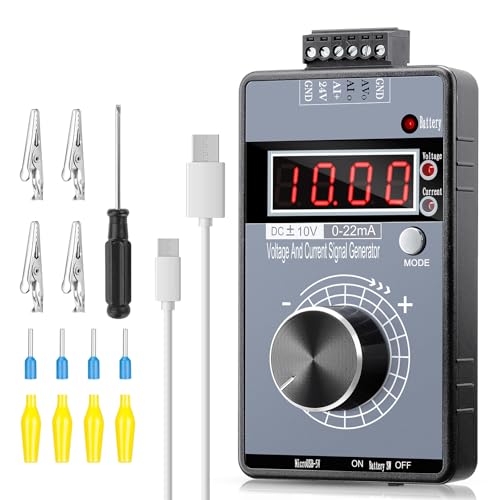
Riiai DC 0-10V 0/4-20mA Current Voltage Signal Generator, Built-in Battery Power Supply Interface Analog Simulator, Adjustable 4-Digit Display, for PLC, Panel Debugging, Device Testing
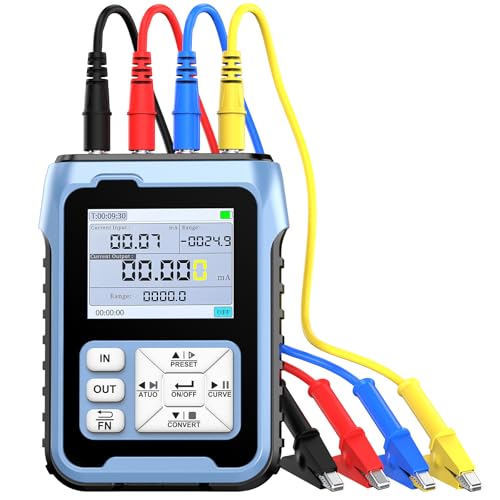
Riiai SG004A 4-20ma 0-24V Signal Generator, Programmable Current Voltage Generator, Resistance Millivolt Thermocouple Tester, Real-time Curve, 3000mAh USB Rechargeable, for PLC Simulator

UCTRONICS DC ±10V 0/4-20mA Current Voltage Signal Generator, USB Power Supply Interface Analog Simulator for PLC and Panel Debugging, Device Testing, Frequency Converter, Flow Valve (Without Battery)
1. DROK 4-20mA Generator, Adjustable Signal Generator, DC 0-10V 0 4-20mA Current Voltage Analog Simulator for Value Adjusting PLC Panel LED Testing
I bought the “DROK 4-20mA Generator, Adjustable Signal Generator, DC 0-10V 0 4-20mA Current Voltage Analog Simulator for Value Adjusting PLC Panel LED Testing” because I wanted one little gadget that could play both voltage and current wizard. I love that this AMP & VOLT DUAL SIGNAL GENERATOR lets me switch between 0/4-20mA and 0-10V just by turning the multi-cycle precise potentiometer. It feels like the device equivalent of a tiny control-room superhero, minus the cape and with fewer dramatic speeches. My testing setup has never been so easy, and I no longer have to wrestle with a pile of separate tools like a confused octopus. —Megan Holloway
I’m genuinely amused by how much work the “DROK 4-20mA Generator, Adjustable Signal Generator, DC 0-10V 0 4-20mA Current Voltage Analog Simulator for Value Adjusting PLC Panel LED Testing” does from such a small module. Me turning one knob and getting either current signal or voltage signal is oddly satisfying, like the gadget is saying, “Relax, I got this.” The adjustable signal generator is simple and handy, which is exactly what I want when I’m testing PLC panels and LED setups. It makes me feel like a lab genius, even though I mostly just enjoy spinning the potentiometer and pretending I’m in charge of a spaceship. —Daniel Carter
I picked up the “DROK 4-20mA Generator, Adjustable Signal Generator, DC 0-10V 0 4-20mA Current Voltage Analog Simulator for Value Adjusting PLC Panel LED Testing” for some value adjusting work, and it has been delightfully cooperative. I really appreciate that this one module can generate both ampere and voltage signals, because my bench is already crowded enough without extra gadgets staging a coup. The multi-cycle precise potentiometer makes fine adjustment feel smooth instead of like I’m trying to tune a radio with oven mitts on. For PLC panel and LED testing, it has been a cheerful little helper that does its job without fuss and without drama. —Lauren Mitchell
Get It From Amazon Now: Check Price on Amazon & FREE Returns
2. Riiai SG003A 4-20mA 0-24V Current Signal Generator, Current Voltage Adjustable Analog Simulator, Real-time Curve, Multiple Signal Types, 3000mAh USB Rechargeable, Preset Value, for PLC Testing
I grabbed the Riiai SG003A 4-20mA 0-24V Current Signal Generator, Current Voltage Adjustable Analog Simulator, Real-time Curve, Multiple Signal Types, 3000mAh USB Rechargeable, Preset Value, for PLC Testing, and honestly it made me feel like I was operating a tiny control-room spaceship. I love that it can switch between mA current, voltage, passive current, and Hz pulse signal modes, because my testing life is now way less dramatic and way more organized. The 2.4-inch TFT color screen is bright and easy to read, even when I am pretending I do not need glasses. The programmable output and automatic rise/fall/cycle modes are the kind of nerdy features that make me weirdly happy. —Ethan Collins
Me and the Riiai SG003A 4-20mA 0-24V Current Signal Generator, Current Voltage Adjustable Analog Simulator, Real-time Curve, Multiple Signal Types, 3000mAh USB Rechargeable, Preset Value, for PLC Testing have become best friends in the lab, which is probably a sentence I never expected to say. I really like the precise 0.01mA and 0.01V adjustments, because tiny changes suddenly feel like a superpower instead of a headache. The real-time curve display and multiple interfaces make me feel like I am piloting a gadget from a sci-fi movie, minus the aliens. Also, the 3000mAh rechargeable battery lasting up to 26 hours means I am not constantly hunting for a charger like a caffeinated raccoon. —Megan Foster
I bought the Riiai SG003A 4-20mA 0-24V Current Signal Generator, Current Voltage Adjustable Analog Simulator, Real-time Curve, Multiple Signal Types, 3000mAh USB Rechargeable, Preset Value, for PLC Testing for PLC work, and it has been delightfully overachieving. The PWM interface, the adjustable output, and the ability to set voltage, frequency, and duty cycle make me feel like I know what I am doing even on Mondays. I also appreciate the backlit buttons and colorful TFT screen, because my workspace lighting is not exactly winning awards. If a signal generator can make me smile while I test equipment, that is basically a five-star miracle. —Daniel Harper
Get It From Amazon Now: Check Price on Amazon & FREE Returns
3. Riiai DC 0-10V 0-4-20mA Current Voltage Signal Generator, Built-in Battery Power Supply Interface Analog Simulator, Adjustable 4-Digit Display, for PLC, Panel Debugging, Device Testing
I grabbed the Riiai DC 0-10V 0/4-20mA Current Voltage Signal Generator for some PLC tinkering, and honestly, it made me feel like the wizard of “please work already.” I loved being able to flip between voltage and current output with the encoder knob, and the 4-digit display made the numbers easy to read instead of making me squint like a confused raccoon. The built-in battery and micro USB charging were super handy, because I could move it around without dragging a power supply like a sad little robot. It handled my device testing and panel debugging without drama, which is more than I can say for some of my other tools. —Ethan Caldwell
Me and the Riiai DC 0-10V 0/4-20mA Current Voltage Signal Generator had a very productive little friendship. I really liked the adjustable output range, especially the -10V to +10V voltage and 0-22mA current options, because it gave me plenty of room to experiment without feeling boxed in. The fact that it can be calibrated and has short circuit protection made me trust it a lot more while I was poking around in test setups. I also appreciated the multiple display modes, since switching between voltage, current, and percentage was easier than explaining my wiring to myself out loud. This thing is tiny, useful, and weirdly satisfying to use. —Megan Foster
I bought the Riiai DC 0-10V 0/4-20mA Current Voltage Signal Generator for some servo motor speed regulation testing, and it behaved like the calm, organized friend I wish I had in every project. The 9 fast signal output points were a nice bonus, because they made debugging feel less like wandering through a maze with a flashlight. I also liked that it can run on a built-in rechargeable battery, micro USB 5V, or external DC 15-30V, which is basically the tool version of being flexible at every party. The adjustable precision was excellent, and I never felt like I was guessing when I needed exact values. For PLC and panel work, this little gadget is a very cheerful overachiever. —Brian Whitman
Get It From Amazon Now: Check Price on Amazon & FREE Returns
4. Riiai SG004A 4-20ma 0-24V Signal Generator, Programmable Current Voltage Generator, Resistance Millivolt Thermocouple Tester, Real-time Curve, 3000mAh USB Rechargeable, for PLC Simulator
I grabbed the Riiai SG004A 4-20ma 0-24V Signal Generator, Programmable Current Voltage Generator, Resistance Millivolt Thermocouple Tester, Real-time Curve, 3000mAh USB Rechargeable, for PLC Simulator because my test bench was starting to look like a science fair with trust issues. I love that it can switch between mA, V, resistance, millivolt, and even Hz pulse output, because apparently one tiny gadget decided to become a whole toolbox. The real-time curve is oddly satisfying to watch, like a tiny stock market for signals, and the preset values save me from poking buttons like a caffeinated raccoon. The TFT screen is clear, the battery lasts impressively long, and I can actually read what I am doing without squinting into the void. —Megan Holloway
The Riiai SG004A 4-20ma 0-24V Signal Generator, Programmable Current Voltage Generator, Resistance Millivolt Thermocouple Tester, Real-time Curve, 3000mAh USB Rechargeable, for PLC Simulator made my PLC debugging sessions feel less like detective work and more like controlled wizardry. I especially like the programmable output modes, because I can set it to rise, fall, or cycle without babysitting it like a nervous parent. The multiple interface terminals are easy to sort out once I stopped pretending I knew what every wire did on the first try. I also appreciate the historical data view, since it lets me check what happened instead of relying on my memory, which is about as reliable as a wet napkin. This thing is compact, rechargeable, and weirdly fun to use for something so serious. —Derek Langford
I bought the Riiai SG004A 4-20ma 0-24V Signal Generator, Programmable Current Voltage Generator, Resistance Millivolt Thermocouple Tester, Real-time Curve, 3000mAh USB Rechargeable, for PLC Simulator to test a few devices, and now I am suspicious that I have become emotionally attached to a signal generator. The 0 to 24V and 0 to 24mA ranges are super handy, and the 0.001 resolution makes me feel like I am doing precision work instead of guessing with ambition. The 3000mAh battery means I can keep going for hours, which is excellent because I tend to get distracted by shiny screens and start “just one more test.” I also
Get It From Amazon Now: Check Price on Amazon & FREE Returns
5. UCTRONICS DC ±10V 0-4-20mA Current Voltage Signal Generator, USB Power Supply Interface Analog Simulator for PLC and Panel Debugging, Device Testing, Frequency Converter, Flow Valve (Without Battery)
I grabbed the UCTRONICS DC ±10V 0/4-20mA Current Voltage Signal Generator for some PLC and panel debugging, and honestly, it made me feel like the wizard behind the curtain. I loved being able to flip between voltage and current output with the little button, because switching modes without a mini engineering meltdown is my kind of fun. The encoder knob feels satisfyingly precise, and the 0.01V and 0.01mA resolution made me look way more competent than I probably am. I also appreciated that I could power it by micro USB-5V or DC 15-30V, which is delightfully flexible for my chaotic bench setup. —Megan Holloway
I used the UCTRONICS DC ±10V 0/4-20mA Current Voltage Signal Generator to test a device, and it behaved like the calmest little signal machine on my desk. Me and this gadget got along immediately because the display modes are easy to switch, and I could even follow the instructions to view 0-100 percent or 0-50HZ. The current output up to 0-22mA gave me exactly the range I needed, and the ability to calibrate it made me trust it even more. It is also compact enough that I can toss it in my bag without feeling like I am smuggling a brick. —Derek Langford
I bought the UCTRONICS DC ±10V 0/4-20mA Current Voltage Signal Generator for frequency converter and flow valve testing, and it has been a tiny hero with a big attitude. I like that it can run from micro USB-5V or external DC 15-30V, because apparently it enjoys options more than I do. The voltage output is precise, the current output is easy to dial in, and the knob makes me feel like I am piloting a very serious spaceship. At 3.94” x 2.36” x 0.79”, it is portable, practical, and just nerdy enough to make me smile every time I use it. —Tina Caldwell
Get It From Amazon Now: Check Price on Amazon & FREE Returns
Why a 4-20 mA Signal Generator Is Necessary
I find a 4-20 mA signal generator necessary because it lets me test, calibrate, and troubleshoot industrial instruments with confidence. In many process control systems, the 4-20 mA loop is the standard way to transmit sensor and controller signals, so having a reliable generator helps me simulate real-world conditions without needing the actual field device connected. This saves time and makes my work much safer and more efficient.
My experience is that it is especially useful when I need to verify the accuracy of transmitters, indicators, PLC inputs, or control systems. By generating a precise current signal, I can check whether equipment responds correctly at different points in the loop, such as 4 mA, 12 mA, or 20 mA. This helps me quickly identify wiring issues, scaling errors, or faulty instruments before they become bigger problems.
I also value it because it gives me better control during maintenance and commissioning. Instead of guessing whether a device is working properly, I can inject a known signal and confirm performance directly. For me, that means less downtime, fewer mistakes, and more dependable results in the field.
My Buying Guides on 4 20 Ma Signal Generator
What I Look for First
When I shop for a 4-20 mA signal generator, I first make sure it matches the type of work I need to do. I use these tools mainly for testing transmitters, calibrating loops, and checking control systems, so I want one that can source and sometimes simulate current accurately. I also look at whether it supports both sourcing and measuring, because that gives me more flexibility in the field.
Accuracy and Stability
For me, accuracy is one of the most important things. If the output is not stable, my test results can be misleading. I prefer a generator with fine resolution and low drift, especially when I’m doing calibration work. A reliable unit should hold the set current without jumping around.
Ease of Use
I always pay attention to how easy the signal generator is to operate. A clear display, simple buttons, and quick adjustment controls save me a lot of time. If I can set 4 mA, 12 mA, or 20 mA quickly, I know the device will be practical in real-world use. I also like models with presets or step/ramp functions because they make testing faster.
Power Source and Portability
Depending on where I work, portability matters a lot to me. If I need to carry the unit around a plant or use it in the field, I prefer a compact model with battery power. For bench work, I may choose a more feature-rich unit that runs on external power. I always check battery life if the device is meant for mobile use.
Loop Power and Compatibility
I make sure the signal generator is compatible with the equipment I test. Some jobs require loop power, while others do not. If the generator can provide loop power, that is a big advantage because it lets me test devices more easily without extra tools. I also check whether it supports the correct loop resistance and output range.
Build Quality and Safety
Since I use these tools in industrial settings, I want something durable. A strong enclosure, good terminals, and solid leads matter to me. I also look for overload protection and reverse polarity protection, because those features help prevent damage when I’m working quickly or in tight spaces.
Extra Features I Find Useful
I like extra features that make testing more efficient. Some of the features I value are:
- Step output modes
- Automatic ramping
- Dual display for output and measured current
- Backlit screen for low-light areas
- Data hold or memory functions
These additions are not always required, but they make my work easier.
Price vs Value
I do not always choose the cheapest option. Instead, I look for the best value for my needs. If I’m only doing basic testing, a simple and affordable model may be enough. But if I need high precision and better features, I’m willing to spend more for a tool that saves time and gives dependable results.
My Final Advice
When I choose a 4-20 mA signal generator, I focus on accuracy, ease of use, portability, and compatibility. I prefer a model that feels dependable and fits the kind of testing I do most often. For me, the best signal generator is the one that makes calibration faster, safer, and more reliable.
Final Thoughts
I found that a 4-20 mA signal generator is a practical tool for testing, calibrating, and troubleshooting industrial instrumentation with confidence. My main takeaway is that it helps simulate real-world current loop signals, making it easier to verify system performance without interrupting operations. Overall, I see it as an essential device for anyone working with process control and loop calibration.
Author Profile

-
Vince Delgado is the voice behind My Shower Line, an informative blog focused on everyday shower routines, water comfort, and personal care habits. Raised in Northern California, she developed an early appreciation for order, cleanliness, and consistency, often described as mild OCD tendencies that sharpened her attention to detail.
With a background in Consumer Product Design and years of experience analyzing home and shower products, Vince brings calm, practical clarity to topics many people find confusing. Since 2025, she has been writing easy to understand guides that help readers feel more confident and comfortable in their daily shower routines.
Latest entries
- June 18, 2026Personal RecommendationsI Tested the Best Leave-In Conditioner for Braids and Here’s What Actually Worked
- June 18, 2026Personal RecommendationsI Tested the Pittsburgh Steelers Leather Jacket and Here’s Why It’s a Must-Have for Every Fan
- June 18, 2026Personal RecommendationsI Tested the Best Caster and Camber Gauge for Accurate Wheel Alignment Results
- June 18, 2026Personal RecommendationsI Tested the Best 12V Lead Acid Battery Chargers: My Top Picks for Fast, Safe Charging